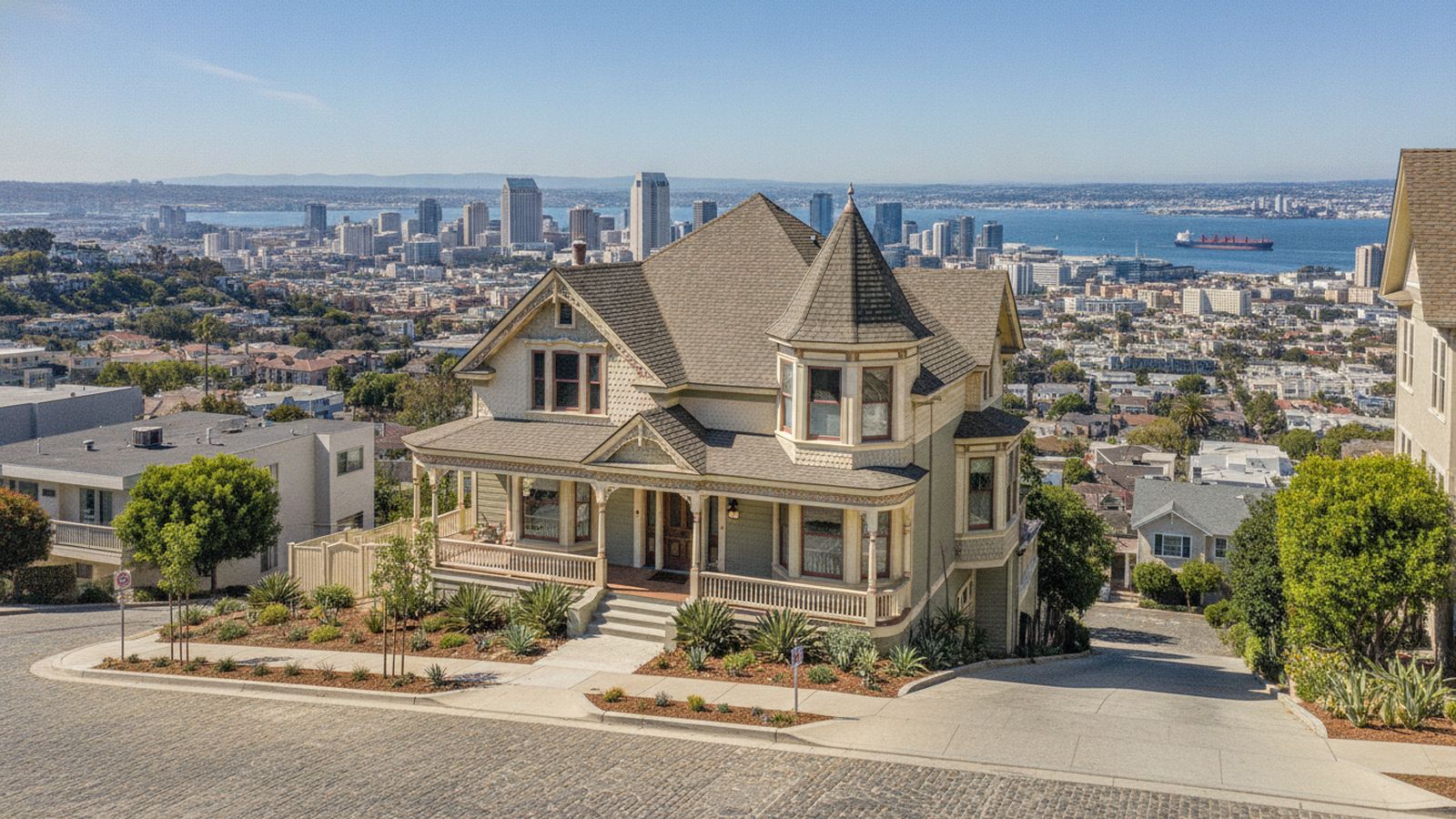
From the hills southeast of downtown, Logan Heights climbs above San Diego Bay, lying south of State Route 94 and to the east of Interstate 5. Named for Congressman John A. Logan, it was among the city's earliest residential suburbs, developed in the 1880s land boom and filled as streetcar lines extended along Imperial Avenue and Market Street. Victorian and Craftsman homes once lined much of the area, and many survive. Freeway construction in the 1960s separated Logan Heights from Barrio Logan to the west, and the community today forms part of the larger Southeastern San Diego planning area.
Housing in Logan Heights
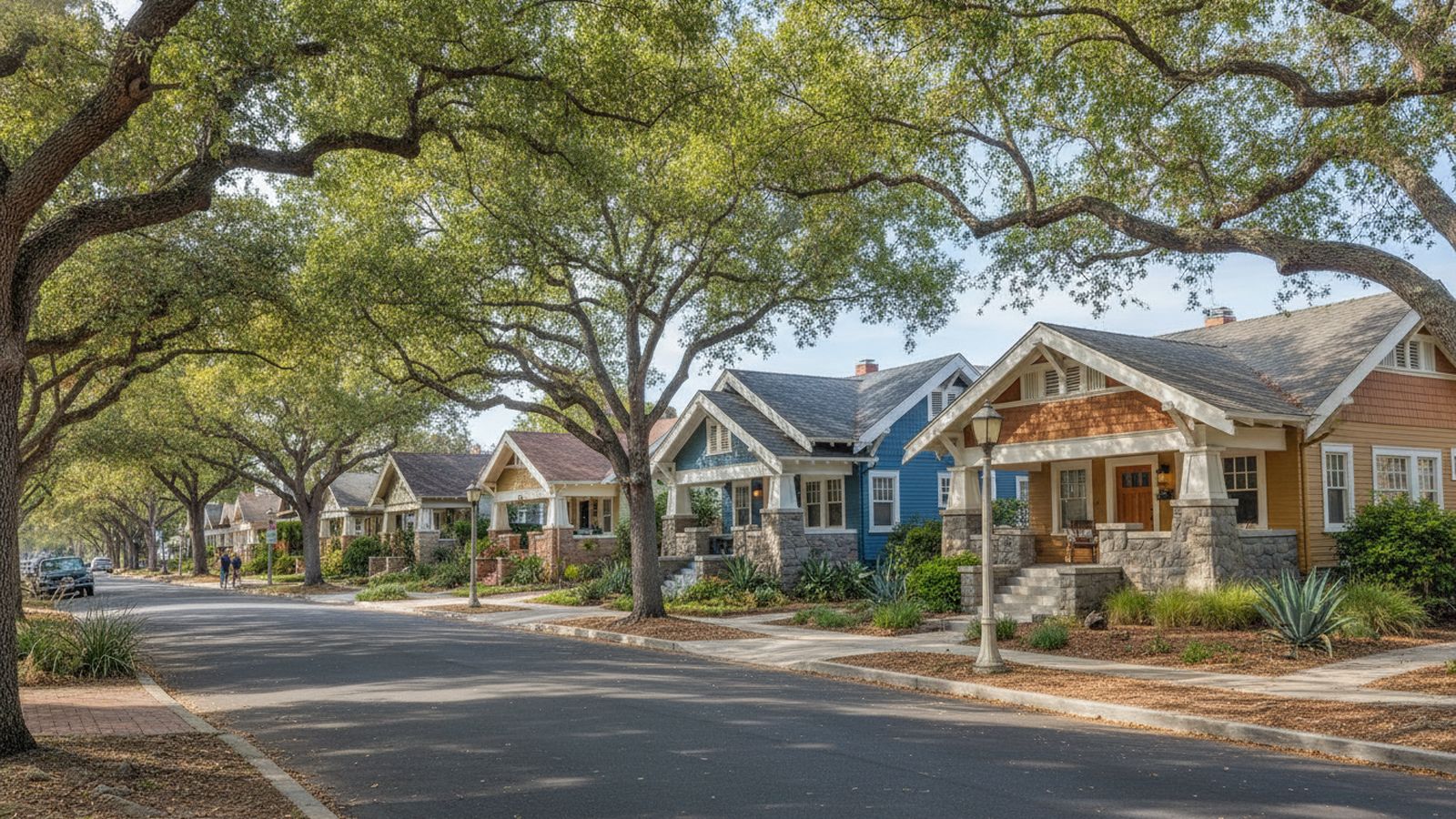
Logan Heights holds some of the oldest housing in San Diego. Queen Anne and Folk Victorian cottages from the late 1800s, along with Craftsman bungalows and Prairie-influenced homes from the 1900s through the 1920s, stand on streets such as Kearny, Irving and Clay. Lots are commonly 2,500 to 5,000 square feet, frequently with rear alleys and a second dwelling at the back. Postwar stucco cottages and 1960s to 1980s apartment buildings fill many gaps. Recent years have brought new townhomes and small-lot developments near the trolley line along Commercial Street and Imperial Avenue. Restored historic homes appear alongside houses with decades of deferred maintenance.
What shifts value here
Elevated lots with bay and downtown skyline views command a notable premium, especially on the higher streets toward Grant Hill. Proximity to downtown and the Blue and Orange trolley lines drives buyer interest from people priced out of Golden Hill and South Park. The edges are affected by traffic noise from Interstate 15, State Route 94 and Interstate 5. Homes with original Victorian or Craftsman detail can be valuable when restored, but repair costs for old foundations, knob-and-tube wiring and wood rot weigh on unrenovated properties. Lots with two legal units draw investor demand. Historic district rules and designations can affect renovation plans and are part of what buyers evaluate.
Neighborhoods
- Grant Hill
- Memorial
- Stockton
- Sherman Heights border
- Mount Hope border
- Logan Heights core
Landmarks
- Imperial Avenue
- Memorial Community Park
- Grant Hill Park
- Market Street
- Logan Heights Branch Library
Valuation approach
Comparable sales are drawn from Logan Heights, Grant Hill, Sherman Heights and Stockton, matching era, architectural style and number of units. Adjustments address views, condition, lot size, legal unit count and freeway exposure. A restored 1890s Victorian and a postwar stucco cottage on the same block require very different comparables. Owners should gather any historic designation records, permits for rear units and renovations, foundation and electrical upgrade documentation, and rental agreements for income units. Photographs of interior period detail help document quality and condition.
Local question
Does a historic designation help or hurt the value of a Logan Heights Victorian?
It depends on the property and the buyer pool. A designation may limit exterior changes, which some buyers see as a restriction. It can also qualify the home for a Mills Act contract that reduces property taxes, which can be a meaningful benefit. The appraisal reviews how designated homes in the area have sold compared with similar undesignated homes and reports any measurable difference.
ZIP codes: 92113, 92102