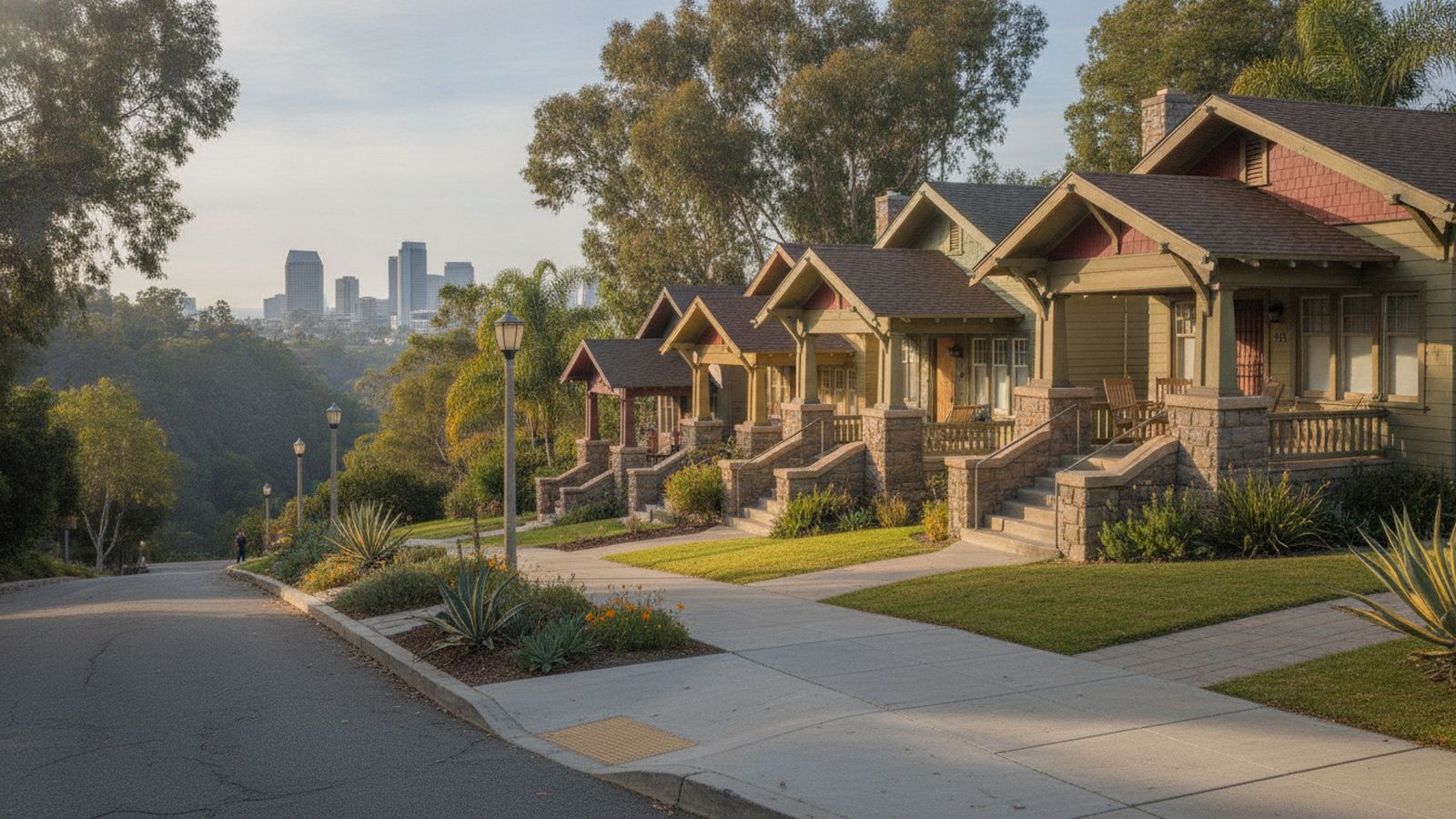
Covering the mesa north of Home Avenue and east of Interstate 805, City Heights is traversed by Fairmount Avenue, El Cajon Boulevard and University Avenue. Once the independent town of East San Diego, it incorporated in 1912 and became part of the City of San Diego in 1923. Streetcar lines spurred early bungalow construction, followed by postwar infill and, from the 1960s onward, extensive apartment building. Interstate 15 was later routed through the neighborhood in a depressed corridor, and the deck park built over it near Teralta helped reconnect the two sides.
Housing in City Heights
The housing stock is varied in age and density. Early twentieth-century Craftsman and California bungalows line streets such as Wightman, Polk and Orange, often on narrow lots around 3,000 to 5,000 square feet with alley access. Postwar cottages and stucco ranch homes fill other blocks, and many single-family lots carry a second unit or a rear house. Close to the main corridors, apartment buildings built between the 1960s and 1980s are widespread, often two-story stucco structures with tuck-under parking. Detached homes along canyon edges, including streets near Swan Canyon and Chollas Creek, sit on irregular parcels with slope. Condominiums exist but form a small share. New ADUs and small-lot projects have increased under recent city zoning changes.
What shifts value here
Values vary sharply block by block. Homes near the Interstate 15 corridor and the busiest commercial arteries face noise and traffic, while quiet interior streets and canyon-rim parcels with green outlooks perform better. Proximity to the rapid bus line on El Cajon Boulevard and Park Boulevard adds convenience. Lots with two units or a permitted ADU attract investor buyers, but unpermitted rear units can reduce value or limit buyer pools. Original Craftsman detail draws interest from buyers priced out of North Park. Deferred maintenance, older plumbing and foundation settlement on slopes are frequent issues. Sales prices show wide dispersion, so accurate grouping of comparable properties is essential.
Neighborhoods
- Azalea Park
- Teralta East
- Teralta West
- Fairmount Park
- Islenair
- Castle
- Cherokee Point
- Colina Park
Landmarks
- Teralta Park over Interstate 15
- Azalea Park
- City Heights Recreation Center
- Swan Canyon
- University Avenue
Valuation approach
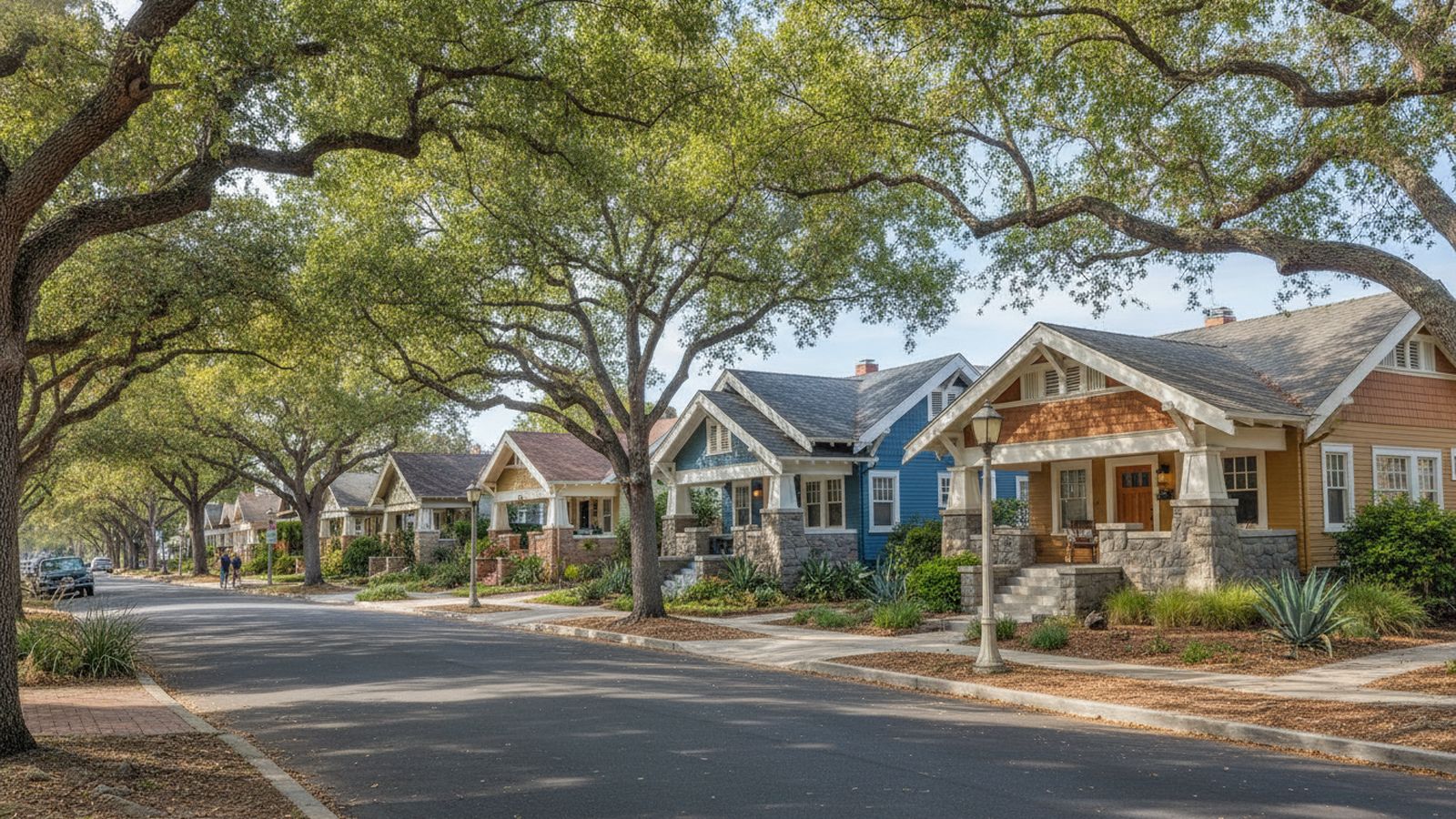
City Heights contains distinct sub-areas, so comparable sales are matched by sub-neighborhood, street character and proximity to arterials before expanding the search. Adjustments cover lot size, number of units, condition, canyon views and freeway exposure. Multi-unit lots may require consideration of rental income alongside sales comparison. Owners should gather permits for any rear house or ADU, rental agreements and rent rolls, records of foundation, roof and plumbing work, and documentation of lot dimensions, since many parcels are irregular or split.
Local question
My City Heights lot has a rear unit that was built decades ago without a permit. How does that affect an appraisal?
An unpermitted unit is typically noted and valued with care. The appraisal may give it limited contributory value or treat it as storage or accessory space rather than legal living area, depending on its condition and how local buyers have treated similar units. Evidence of legalization, a city amnesty or ADU approval, or a long recorded rental history helps support a higher contribution in the final analysis.
ZIP codes: 92105, 92115