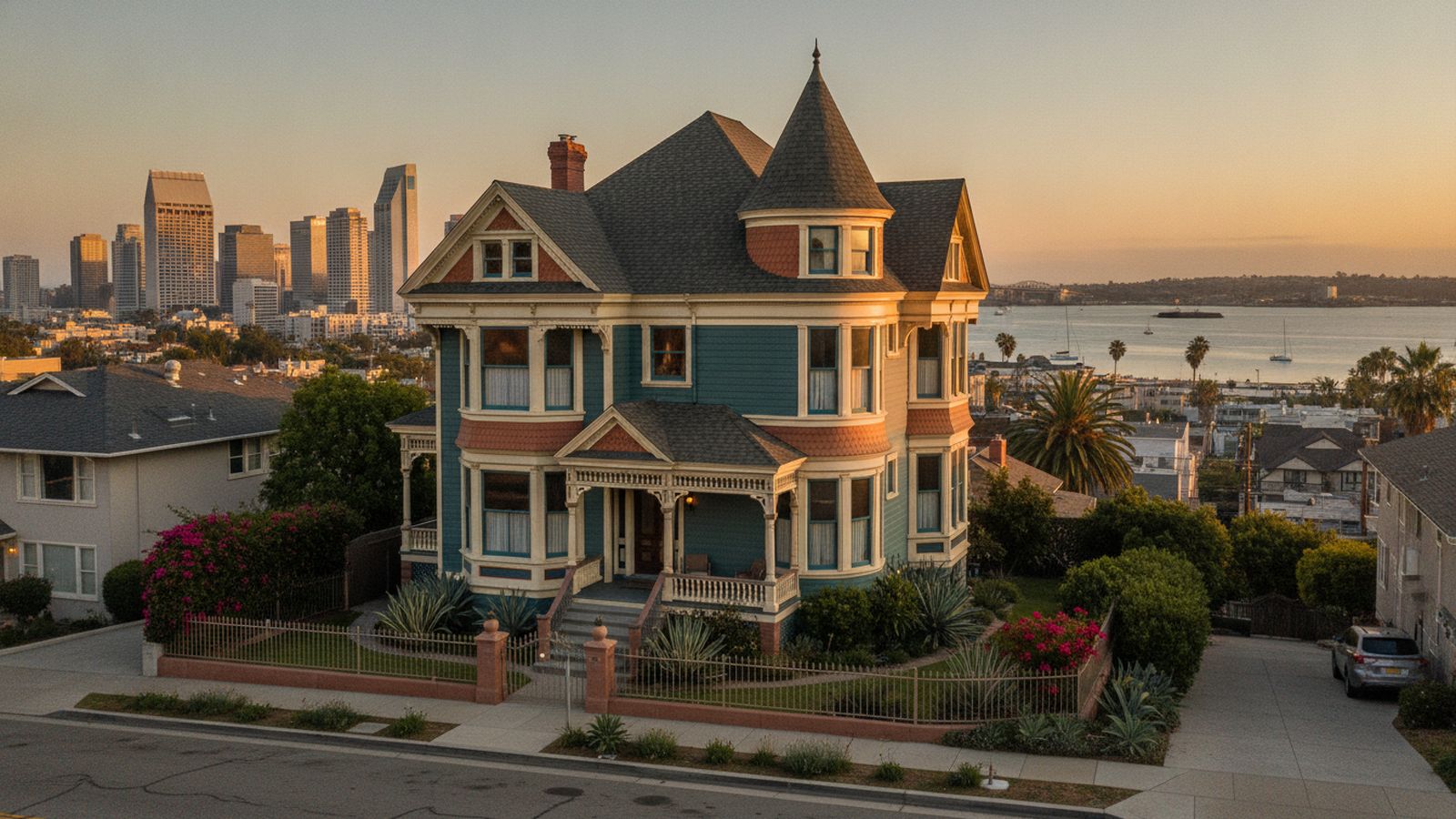
Golden Hill rises immediately east of downtown San Diego, bounded by Balboa Park on the north, State Route 94 on the south and Interstate 5 on the west. It was one of the city's first upscale neighborhoods, where business leaders built Victorian and Queen Anne homes in the late 1880s to take advantage of views over the bay. Development continued into the 1920s with Craftsman and Spanish Revival homes. After World War II, many large houses were divided into apartments, but restoration work since the 1970s has preserved much of the early architecture and returned a number of homes to single-family use.
Housing in Golden Hill
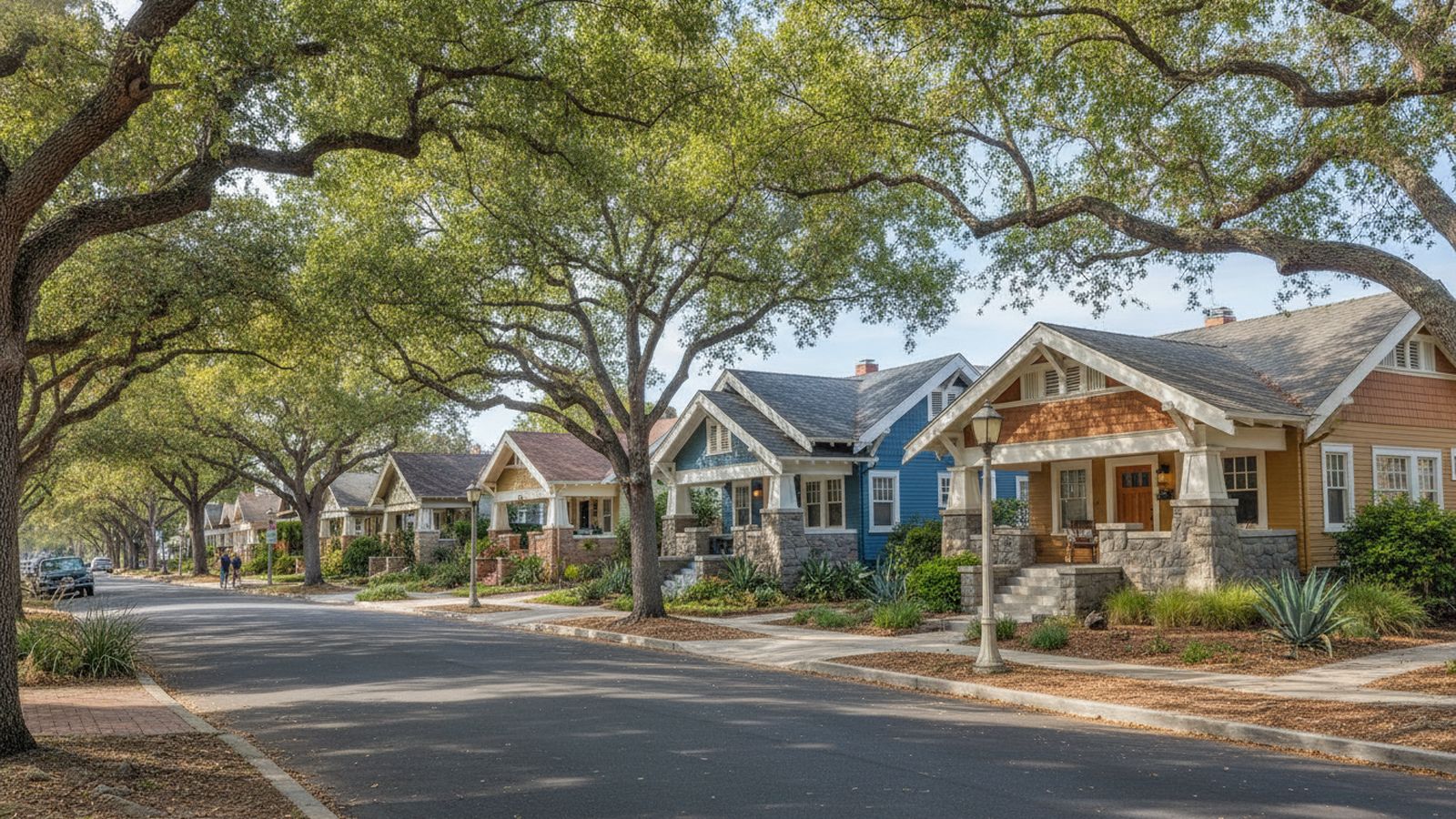
The western blocks nearest downtown hold big Craftsman, Queen Anne and Victorian houses built from the 1880s to the 1910s, many on lots looking out over the bay or skyline. Further east, streets with lots of 5,000 to 7,000 square feet are filled with Spanish Revival houses and Craftsman bungalows built between the 1910s and 1930s. Golden Hill also contains a considerable stock of duplexes, small apartment buildings and large houses converted into multiple units, along with a few newer condominium projects. Many lots carry rear cottages or ADUs, and some historic homes have been carefully restored while others retain apartment-era alterations. Mid-century and newer infill buildings appear along Broadway and near State Route 94.
What shifts value here
Views toward downtown, the bay and Coronado drive premiums, especially on the western blocks and canyon edges. Proximity to downtown jobs, Balboa Park and the 25th Street corridor supports demand. Noise from State Route 94, Interstate 5 and aircraft on final approach to San Diego International Airport, which pass directly overhead, reduces appeal for some properties. The condition and integrity of historic homes produce wide price differences between restored and unrestored examples. Multi-unit conversions are valued partly on rental income, and the count of legal versus unpermitted units affects pricing. Historic designations and Mills Act contracts can support value by lowering taxes and signaling preservation.
Neighborhoods
- Golden Hill Historic District
- 25th Street corridor
- Broadway corridor
- Golden Hill Park area
- Switzer Canyon edge
- Fern Street area
Landmarks
- Golden Hill Park
- Balboa Park Golf Course
- 25th Street
- State Route 94
- Golden Hill Recreation Center
Valuation approach
Comparable sales are selected by architectural era, size and view first, because a restored Victorian and a 1920s bungalow attract different buyers even on the same street. Golden Hill sales are supplemented with South Park, Sherman Heights and Bankers Hill sales when needed. Adjustments address view, historic integrity, unit count, legal status of additional units, parking and condition. Owners should gather any historic designation and Mills Act documents, permits and certificates of occupancy for each unit, rent rolls and leases, and records of foundation, roof and system upgrades.
Local question
How is a large Golden Hill Victorian that was split into apartments valued?
After verifying the number of legal units through certificates of occupancy and permits, the appraiser treats the property as a multi-unit building for valuation, drawing on sales of comparable converted houses and an income approach using both actual and market rents. If restoration to single-family use is the most likely buyer path, the cost and resulting value are also considered, and the better-supported use guides the conclusion.
ZIP codes: 92102