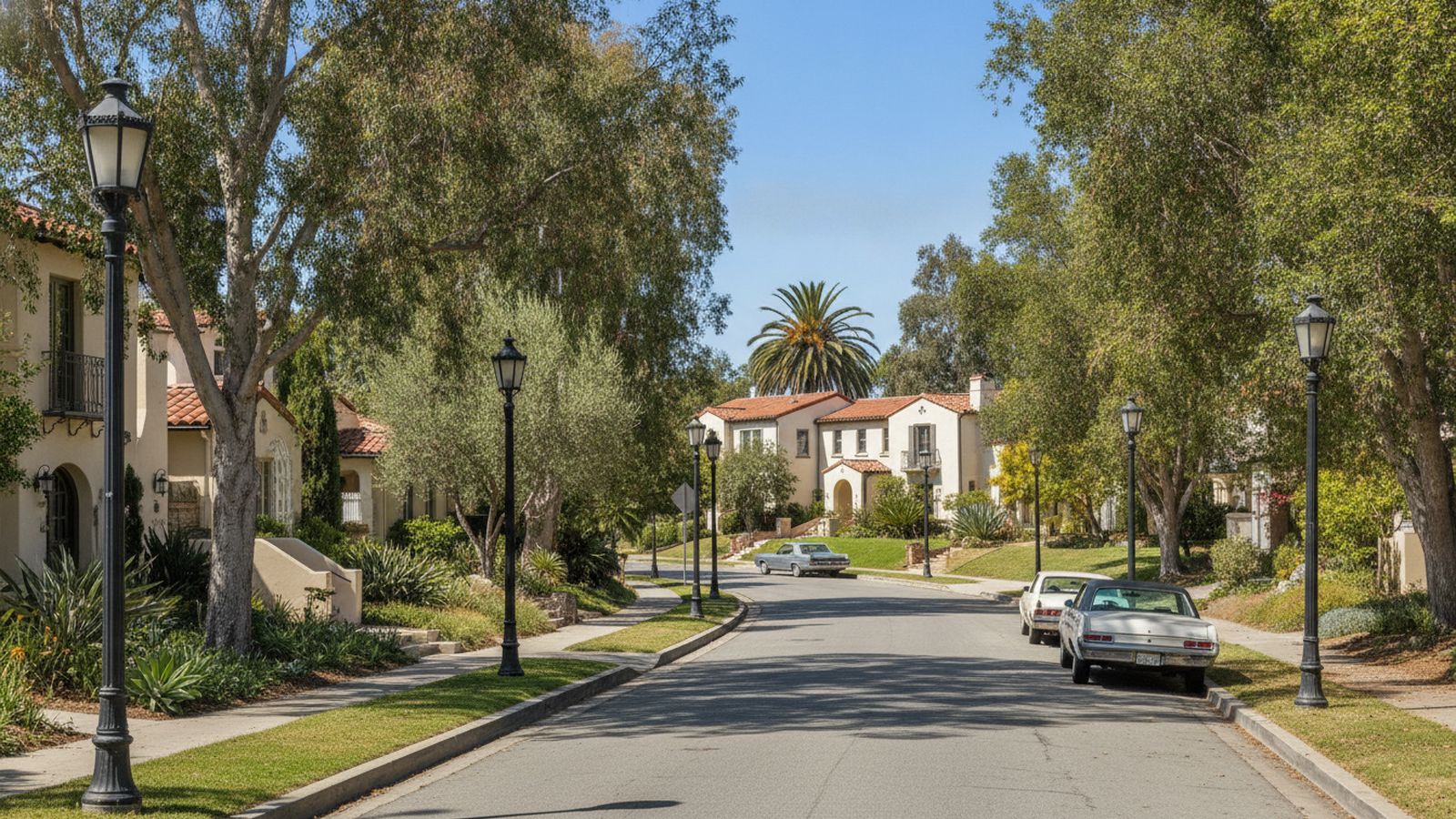
Talmadge lies east of Kensington and north of El Cajon Boulevard, stretching toward Fairmount Avenue and the College Area. Talmadge Park was promoted by developers in the mid-1920s and named for silent film stars Constance, Natalie and Norma Talmadge, who appeared at its opening event. The original subdivision installed ornamental street lights and laid out gently curving streets, many of which survive. Building slowed during the Depression, so the neighborhood filled in over the following decades, leaving a layered housing stock that runs from late 1920s revival styles to postwar ranch homes and a band of apartments near the boulevard.
Housing in Talmadge
The core of Talmadge Park holds detached homes built from the late 1920s through the 1950s. Spanish Revival and Mediterranean styles appear on Monroe Avenue, Madison Avenue and Lorca Drive, with smooth stucco, tile accents and arched entries. Postwar ranch houses and minimal traditional cottages fill many blocks farther east. Lot sizes usually run from 5,000 up to 7,000 square feet, with bigger parcels on the northern canyon rim overlooking Interstate 8. Closer to El Cajon Boulevard the stock shifts to small apartment buildings, courtyard units and a handful of condominiums, creating a clear split between the residential interior and the commercial edge. ADUs and garage conversions are increasingly common on the larger interior lots.
What shifts value here
Homes inside the historic Talmadge Park tract, with the restored lamp posts and period architecture, generally trade above houses closer to El Cajon Boulevard, where traffic, commercial uses and multifamily density weigh on value. Canyon-edge parcels along the northern rim gain from views but can lose ground to freeway noise from Interstate 8. Proximity to San Diego State University creates rental demand that supports investor interest in smaller homes and income properties. Original plumbing, foundations on older raised floors and unpermitted additions are recurring condition concerns. Restored revival homes with period detail consistently draw stronger buyer response than heavily altered houses of the same age and size.
Neighborhoods
- Talmadge Park
- East Talmadge
- Monroe Avenue corridor
- Lorca Drive area
- Euclid Avenue north
- Talmadge canyon rim
Landmarks
- Talmadge Gates on Euclid Avenue
- El Cajon Boulevard
- Fairmount Avenue
- Interstate 8 canyon edge
Valuation approach
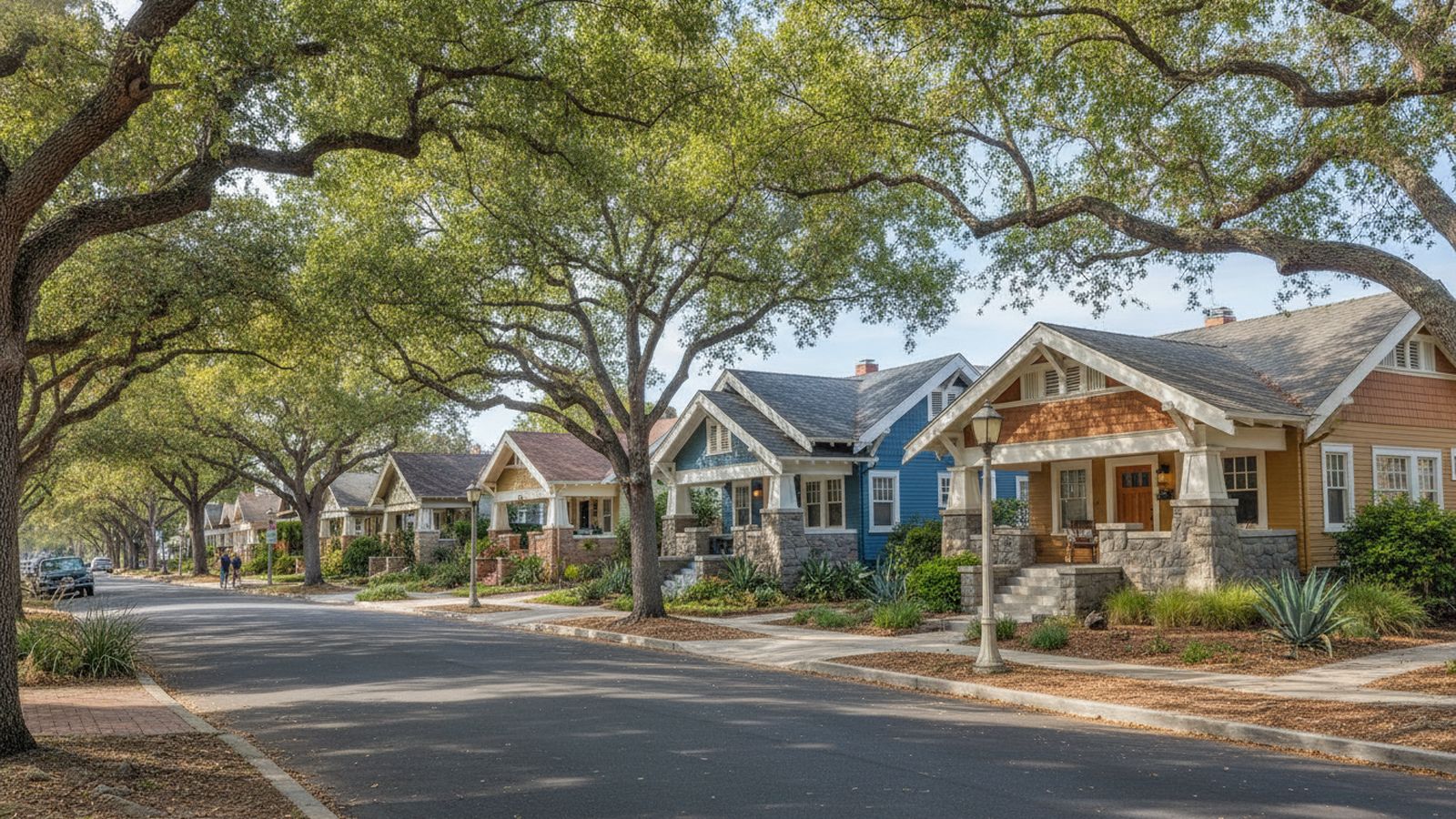
Comparable selection starts within Talmadge, separating sales inside the original Talmadge Park tract from those nearer El Cajon Boulevard, then extends to Kensington and the western College Area when needed. Adjustments address architectural era, canyon frontage, traffic exposure, lot utility and the legal status of added living space. Owners should collect permits for additions and conversions, documentation for any ADU, recent sewer lateral or foundation inspections, and records of electrical upgrades. Rental history matters for income-producing units near the boulevard.
Local question
Do the Talmadge Gates and lamp posts actually affect home values?
They signal the boundaries of the original Talmadge Park tract, and buyers often treat homes inside it as a distinct product with period architecture and quieter streets. The gates themselves do not add a fixed amount, but location within the historic tract is a meaningful factor. Comparable sales from inside the tract are weighted most heavily when appraising a home there, rather than sales from the boulevard edge.
ZIP codes: 92115