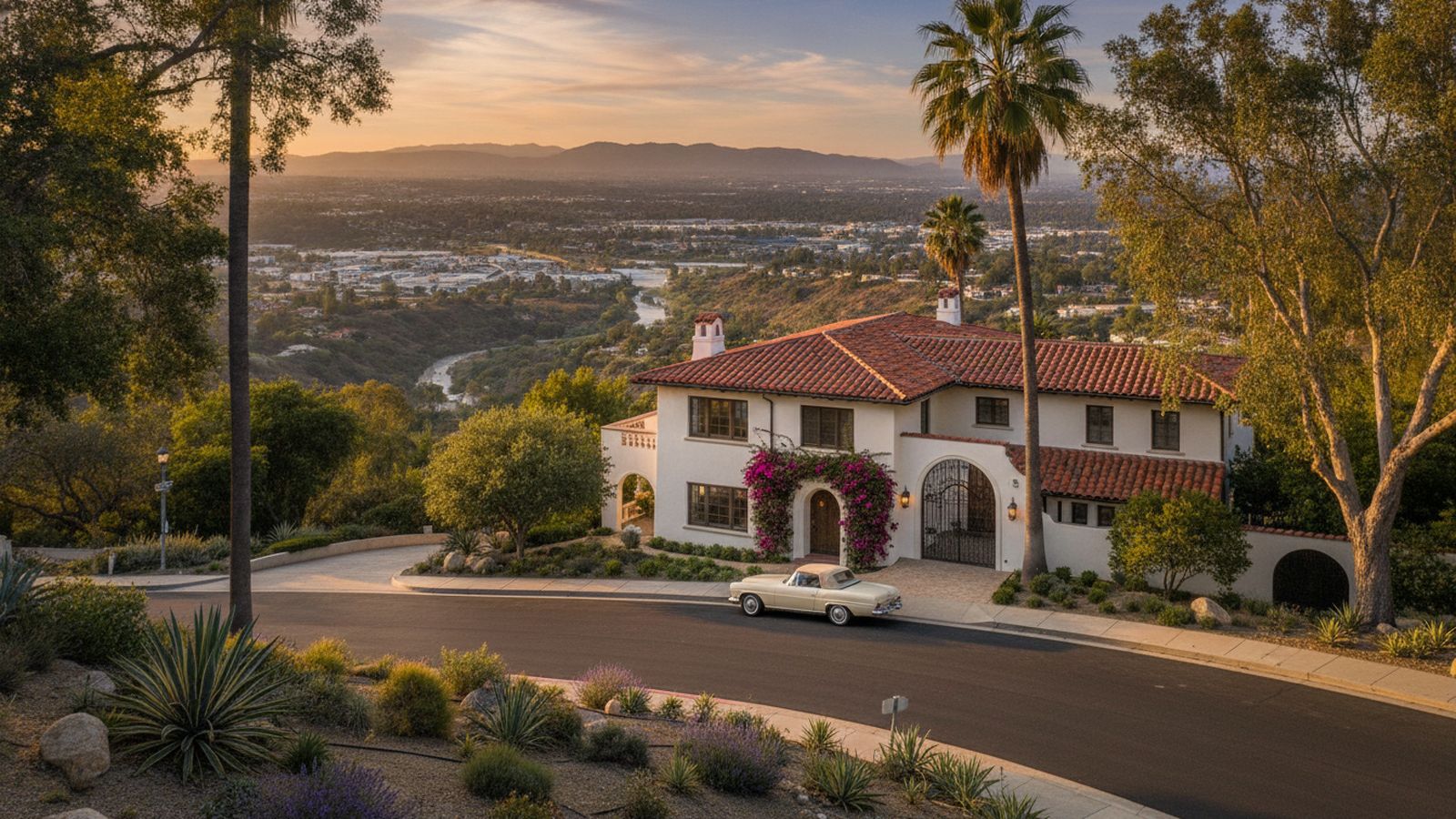
Kensington occupies a small mesa east of Interstate 15 and north of Adams Avenue, bounded on three sides by canyons that drop toward Mission Valley. The neighborhood grew in phases after streetcar service reached Adams Avenue in the 1910s, with the Kensington Park subdivision filling through the 1920s and 1930s and later tracts extending east during the postwar years. Its curving streets, mature street trees and the Kensington sign arching over Adams Avenue give it a distinct identity within Mid-City San Diego, and its limited land area has kept the housing stock remarkably intact over the decades.
Housing in Kensington
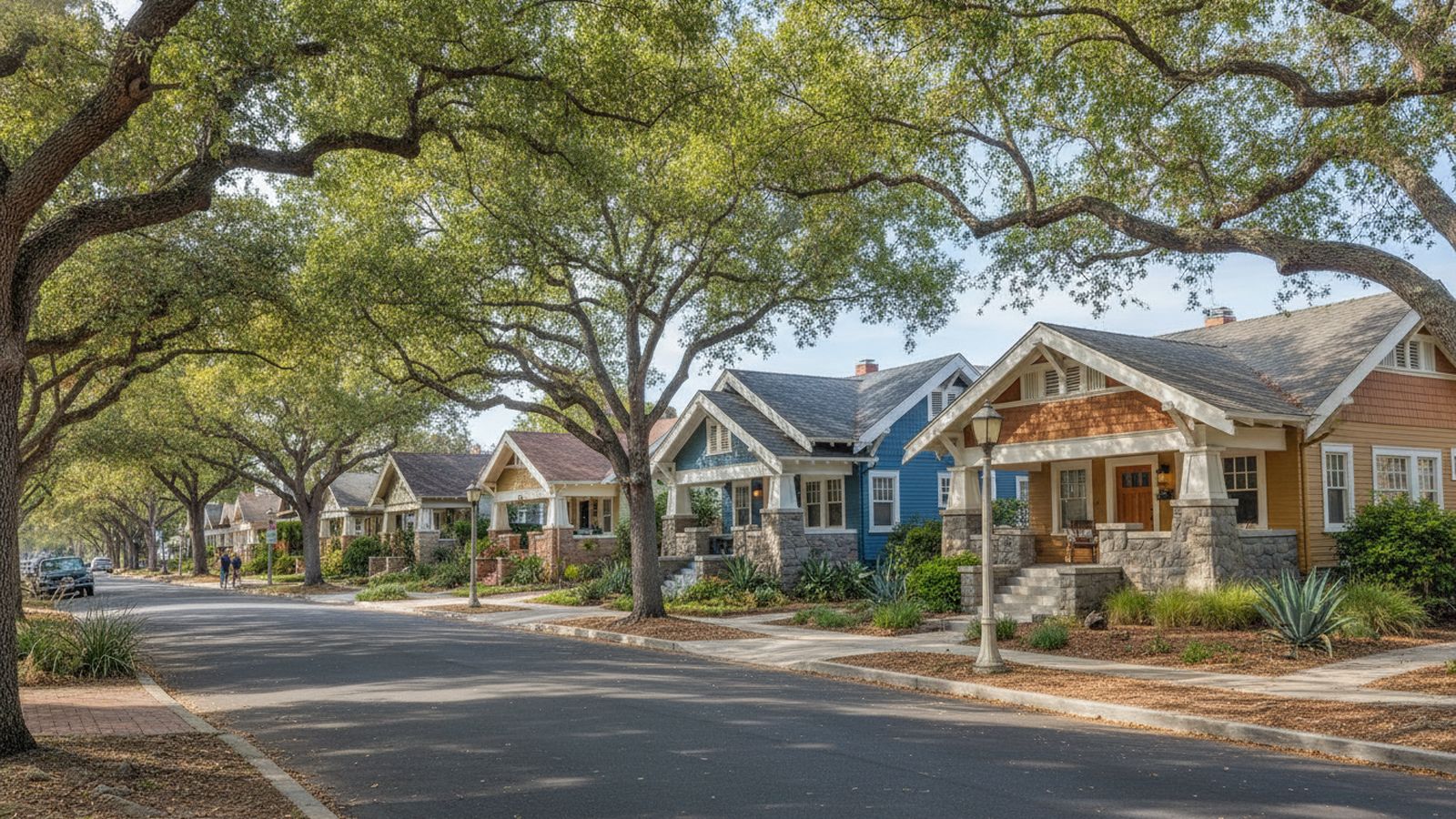
Detached single-family homes dominate. The oldest section west of Marlborough Avenue holds Spanish Colonial Revival houses with red tile roofs, stucco walls, arched windows and detached garages reached by rear alleys or narrow side drives. Craftsman bungalows and a few Tudor-style cottages appear among them. Farther east, homes from the 1940s and 1950s are larger ranch designs, many on canyon-edge lots along Kensington Drive and Alder Drive with decks overlooking open space. Most lots are 5,000 to 7,500 square feet, although canyon lots may be bigger, with a large portion being slope that cannot be used. Condominiums are scarce and mostly confined to small buildings near Adams Avenue. Garage conversions and detached ADUs have become more frequent as owners add space without changing the street-facing character.
What shifts value here
Canyon frontage and views toward Mission Valley carry clear premiums, particularly on the rim streets where homes look across open slopes rather than at neighbors. Original 1920s architectural detail such as tile, plaster arches and wood windows supports value when preserved, while insensitive remodels can work against a house. Freeway noise from Interstate 8 and Interstate 15 affects homes on the northern and western edges. Older sewer laterals, original electrical service and foundation movement on slope lots are common condition issues that buyers price in. Walkability to Adams Avenue restaurants, the library and the Ken Cinema adds appeal. The small number of annual sales means a single unusual transaction can distort averages, so value conclusions rest on careful comparison rather than neighborhood medians.
Neighborhoods
- Kensington Park
- Kensington Heights
- Marlborough Avenue area
- Kensington Drive canyon rim
- Talmadge Park border streets
Landmarks
- Adams Avenue
- Kensington sign
- Kensington-Normal Heights Library
- Ken Cinema
Valuation approach
Comparable sales come first from Kensington itself, then from Talmadge Park and the eastern part of Normal Heights when inventory is thin. Adjustments focus on canyon frontage, view quality, architectural integrity and the condition of original systems. A 1928 Spanish Revival with intact detail is not interchangeable with a 1950s ranch two blocks east, so era and style matching matter. Owners should gather permits for additions, ADU or garage conversion approvals, foundation or retaining wall reports, sewer lateral inspections and any records of window or roof replacement that preserved original materials.
Local question
Does a canyon lot in Kensington always sell for more than an interior lot?
Not always. A canyon lot with an open view toward Mission Valley and a usable rear yard typically commands a premium. A canyon lot that is mostly steep slope, faces freeway noise, or carries retaining wall or drainage problems may sell at or below interior lots. The appraisal considers how much of the lot is usable, what views the living spaces offer, and how recent Kensington buyers handled comparable sites.
ZIP codes: 92116