
Spanning about 370 square miles, the City of San Diego runs north from San Ysidro on the Mexican border to Rancho Bernardo, and east from the Pacific coast toward Santee. Growth began around the bay and Alonzo Horton's 1867 New Town, then climbed onto the mesas as streetcar lines pushed north and east in the early 1900s. Postwar tract building filled Clairemont, Serra Mesa and the College Area, and later master-planned communities spread across the northern mesas. The result is a single city whose housing ranges from Victorian cottages near downtown to recent hillside townhomes along State Route 56.
Housing in City of San Diego
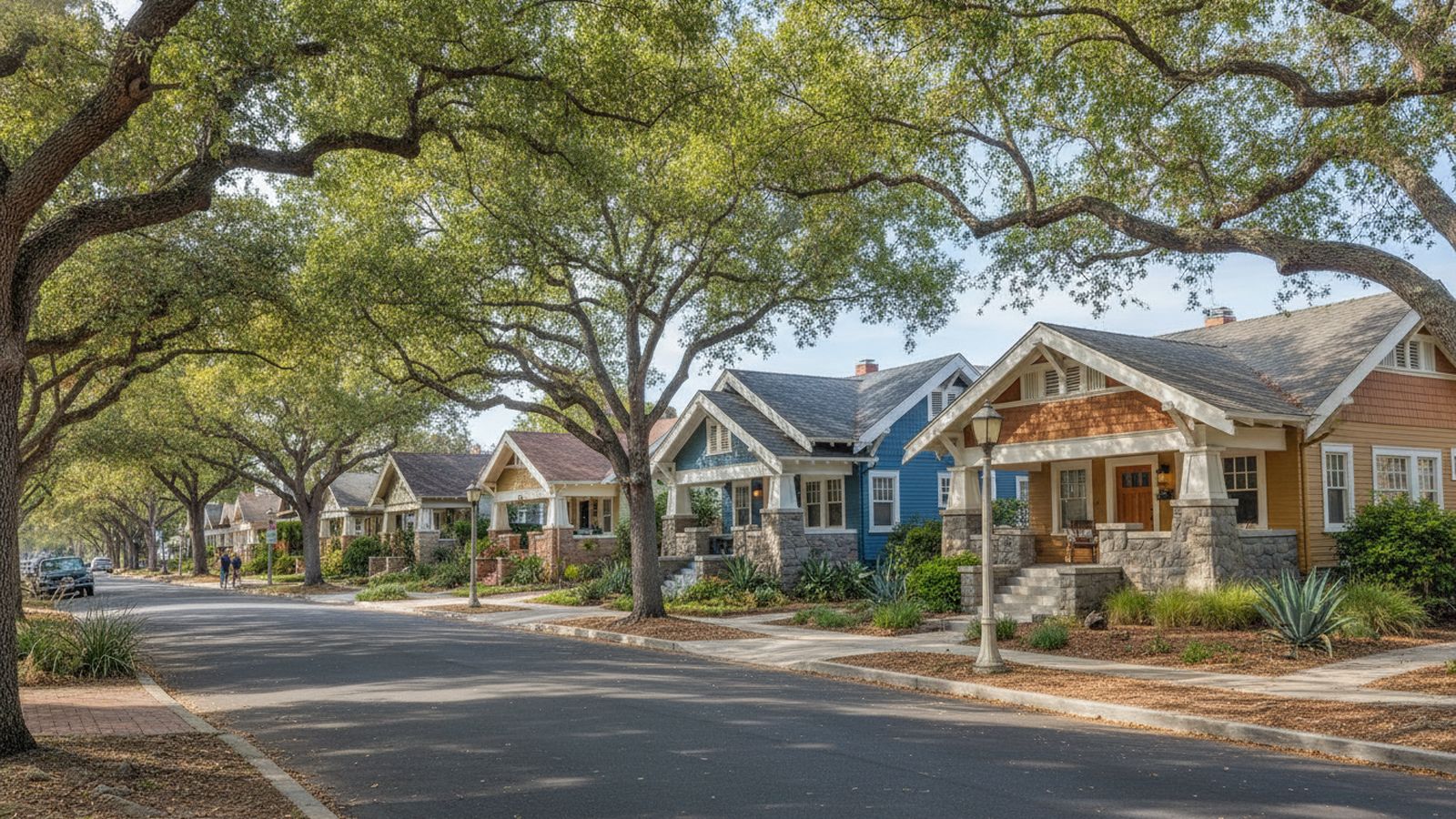
Detached homes dominate most neighborhoods, though the urban core and Mission Valley hold large numbers of condominiums and apartment conversions. In older areas like Golden Hill, Kensington and North Park, lots of 5,000 to 7,000 square feet hold Spanish Revival homes, Craftsman bungalows and a few Victorians. Postwar ranch tracts from the 1950s and 1960s cover Clairemont, Allied Gardens and much of the eastern mesas, often with single-car garages that owners have since converted or expanded. Planned communities built from the 1970s onward, including Rancho Penasquitos, Scripps Ranch and Carmel Valley, add stucco two-story homes, townhome clusters and HOA amenities. City rules adopted since 2017 have made accessory dwelling units common, and some parcels now carry several ADUs under the city's bonus program.
What shifts value here
Location within the city matters far more than citywide averages. Coastal proximity, ocean or bay views and walkability to established commercial streets push prices up sharply, while freeway noise along Interstate 805, Interstate 15 and State Route 94 pulls nearby homes down. The approach path into San Diego International Airport affects parts of Point Loma, Mission Hills and Golden Hill, and jet traffic from MCAS Miramar is a factor in some northern neighborhoods. Canyon-edge lots can carry both view premiums and brush-clearance obligations. Newer northern communities often add Mello-Roos special taxes and HOA dues, and historic designations in older districts can limit remodeling while supporting value through Mills Act property tax contracts.
Neighborhoods
- La Jolla
- Point Loma
- Clairemont
- North Park
- Rancho Bernardo
- Mira Mesa
- City Heights
- Carmel Valley
Landmarks
- Balboa Park
- Mission Bay Park
- Cabrillo National Monument
- Petco Park
- Torrey Pines State Natural Reserve
Valuation approach
Because the city contains dozens of distinct submarkets, comparable sales are drawn from the same community planning area whenever possible rather than from a citywide radius. Crossing a major canyon or freeway often means a different price level, so location adjustments are made only with paired-sales support. Owners should gather permits for additions, garage conversions and ADUs, since city permit records are frequently checked against the square footage reported in county assessor data. For trust and probate work, records of deferred maintenance, roof age and sewer lateral condition help establish the condition rating as of the effective date.
Local question
Does a permitted ADU in the City of San Diego add dollar for dollar to the value of a home?
Rarely. Buyers in most San Diego neighborhoods pay a premium for a legal, permitted ADU, but the contribution usually falls below construction cost. The appraiser searches the same planning area for sales of comparable homes both with and without a second unit, and rental income can also be weighed when the ADU has a tenant. Unpermitted units receive little or no contributory value, so the permit card and final inspection sign-off matter a great deal.
ZIP codes: 31 ZIP codes, including 92101, 92102, 92103, 92104, 92105, 92106