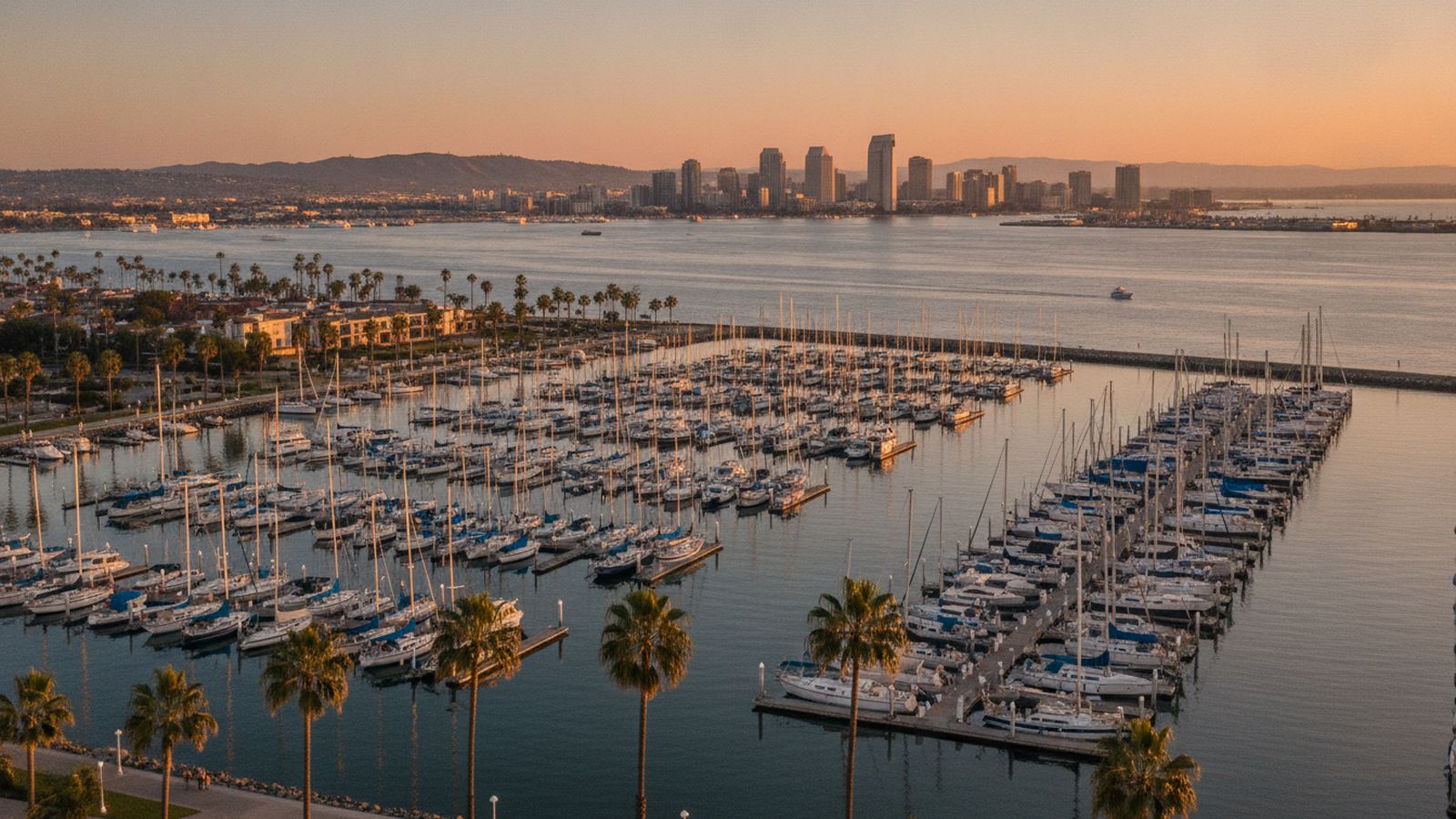
Ranking second in size among San Diego County cities, Chula Vista extends eastward from San Diego Bay all the way to the Otay Lakes. It grew from lemon groves planted in the late 1800s, and the arrival of Rohr Aircraft during World War II drew workers who filled postwar subdivisions on the west side. Incorporated in 1911, the city expanded east in the 1980s and 1990s through Rancho del Rey, Eastlake, and Otay Ranch, master plans that turned former ranchland into some of the county's largest new-home communities.
Housing in Chula Vista
West Chula Vista holds 1920s through 1950s bungalows near Third Avenue, postwar ranch homes in Castle Park and Hilltop, and apartments and condos close to Broadway. Centrally, Sunbow and Rancho del Rey contribute 1980s and 1990s townhomes and tract houses on moderate lots. East of Interstate 805, Eastlake, Otay Ranch, and Rolling Hills Ranch are dominated by 1990s through 2020s planned communities with HOAs, community facilities districts, and a range from condos to larger detached homes. Many west side lots support ADUs or garage conversions, and newer east side tracts include multigenerational floor plans.
What shifts value here
The divide between west and east Chula Vista is the main value line. Western neighborhoods rely on lot size, condition, and proximity to the bayfront and Third Avenue, while eastern master plans weigh age, upgrades, HOA dues, and remaining Mello-Roos taxes. Road noise affects houses close to H Street, Telegraph Canyon Road, State Route 125, Interstate 805 or Interstate 5. Views of the bay, Otay Lakes, or surrounding hills add value in the east. Hillside properties near open space face wildfire concerns, and the redevelopment of the bayfront can influence western neighborhoods.
Neighborhoods
- Third Avenue Village
- Castle Park
- Hilltop
- Rancho del Rey
- Sunbow
- Rolling Hills Ranch
- Eastlake
- Otay Ranch
Landmarks
- Chula Vista Bayfront
- Third Avenue
- Otay Lakes
- Chula Vista Elite Athlete Training Center
- North Island Credit Union Amphitheatre
Valuation approach
An appraiser keeps west and east Chula Vista comparables separate whenever possible, since buyers treat them as different markets. On the west side, lot size, ADU potential, and level of updating matter most, and older homes can vary widely in condition. In the east, sales from the same village or builder tract are preferred, with adjustments for upgrades, views, and special taxes. Owners should gather HOA and Mello-Roos statements, permits for conversions or ADUs, solar documents, and a list of updates with dates.
Local question
Why might a west Chula Vista home appraise differently from a similar-sized home in Otay Ranch?
West side homes are usually older, on larger lots with no HOA or special tax, while Otay Ranch homes are newer and carry HOA dues and Mello-Roos obligations. Buyers price those trade-offs differently, so the appraiser selects comparables from each home's own market area rather than mixing them. The report explains the factors affecting each property, making the comparison clear for estate or divorce matters.
ZIP codes: 91910, 91911, 91913, 91914, 91915