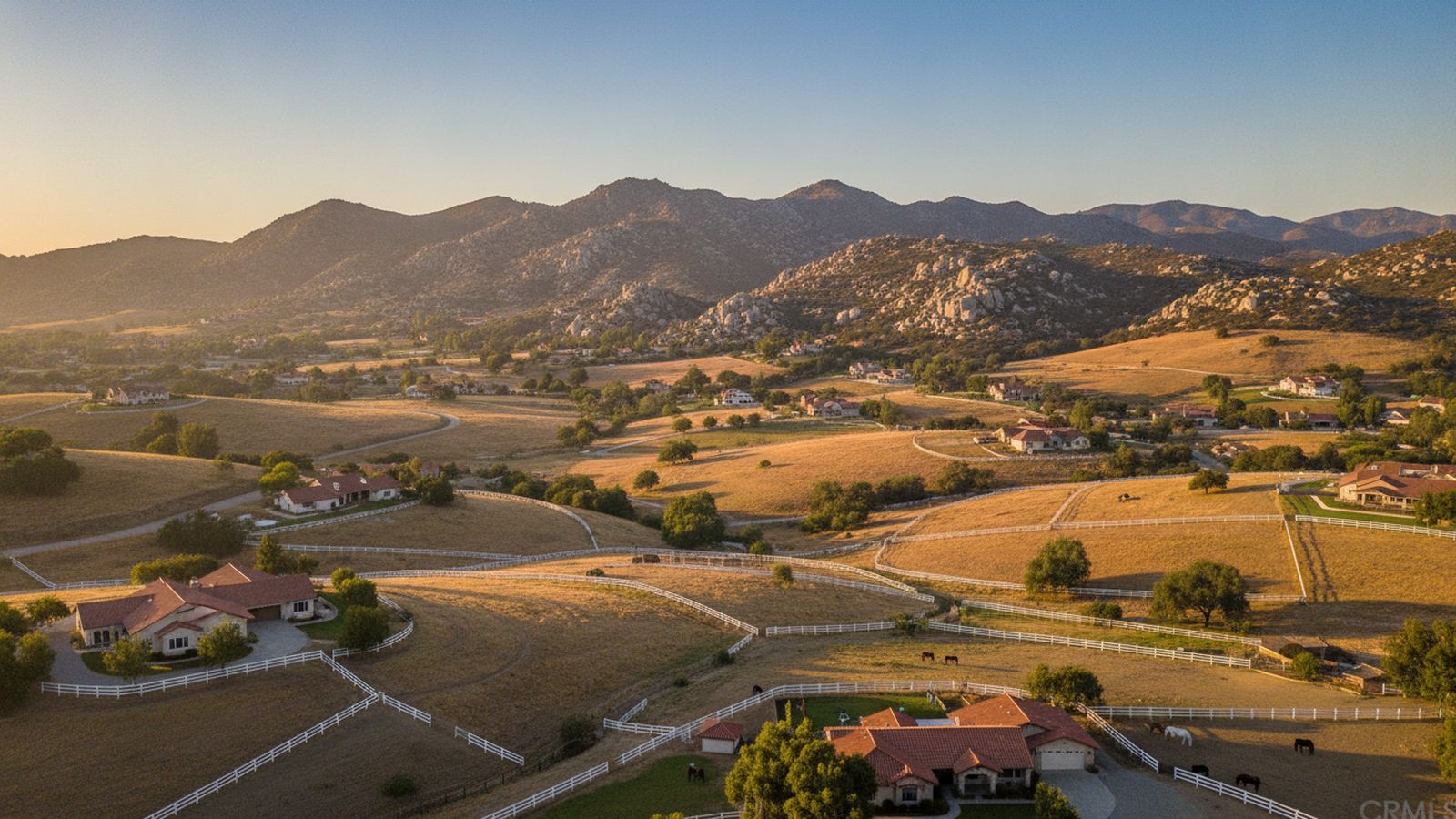
Poway is an incorporated city of roughly 48,000 people tucked into a broad valley east of Interstate 15, ringed by Iron Mountain, Mount Woodson and the ridges above Lake Poway. Ranching and citrus defined the valley for generations, and the 1980 incorporation was driven largely by residents who wanted to control growth and keep the rural feel. That decision still shapes the housing market today: large lots, equestrian zoning across much of the city, and tract neighborhoods from the 1960s and 1970s sitting a short drive from custom estates on acre-plus parcels in the hills.
Housing in Poway
Most of the city's subdivision homes are on the valley floor and date chiefly from the late 1960s through the 1980s, a blend of one-story ranch houses and two-story stucco designs on lots commonly 7,000 to 10,000 square feet, clearly bigger than similar tracts in San Diego. The Garden Road area, Old Coach and Green Valley step up to semi-custom and custom houses on parcels of half an acre to several acres, often with corrals, arenas, barns or separate workshops. A modest supply of condos and townhomes sits near Poway Road and the business park. Certain eastern and hillside lots depend on septic, and the rural pockets frequently have private roads maintained under shared agreements. Accessory dwelling units have grown steadily on the larger lots.
What shifts value here
Lot size and usable land matter more in Poway than in most of the county. A flat, fenced acre with horse facilities trades very differently from an acre of steep granite slope, even when the gross area matches. Views toward Mount Woodson or across the valley carry a premium, while frontage on Poway Road, Pomerado Road or Espola Road reduces appeal. Large stretches of the city's north and east sit in high fire hazard zones, and homes were lost here in the 2007 wildfires, so buyers now factor in the price and availability of insurance. Septic condition, well use on a few parcels, unpermitted barns or guest quarters, and Poway Unified attendance boundaries also influence value from one street to the next.
Neighborhoods
- Green Valley
- Old Coach
- StoneRidge
- Garden Road
- Bridlewood
- Silverset
Landmarks
- Lake Poway
- Iron Mountain
- Old Poway Park
- Blue Sky Ecological Reserve
- Poway Road
Valuation approach
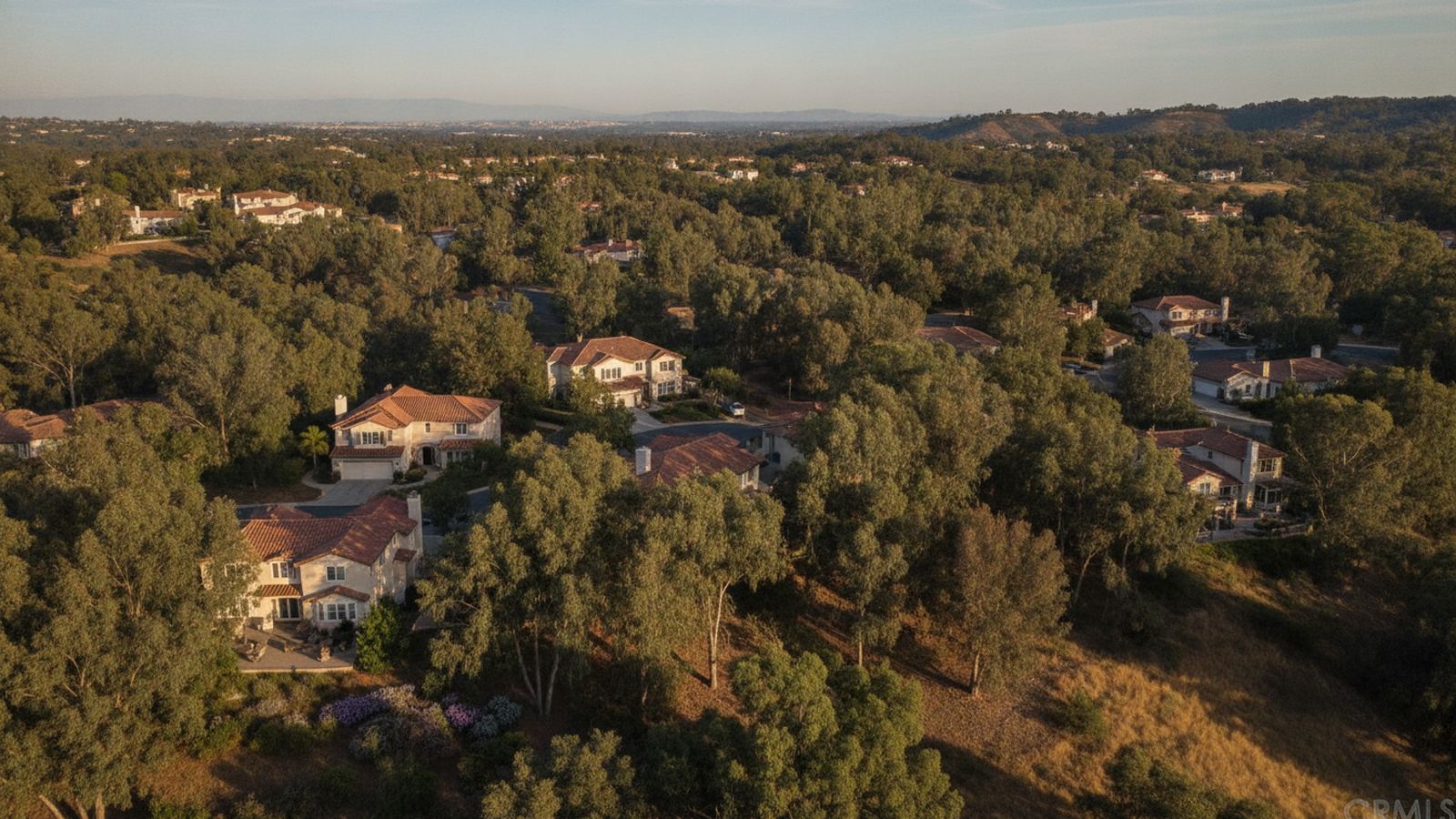
Comparable selection in Poway starts with matching land utility, not just square footage. A valley-floor tract home is compared with other tract homes inside the city, while rural parcels need sales with similar acreage, topography, horse-keeping use and septic or sewer status, sometimes drawn from Ramona or the edges of Rancho Bernardo when in-city sales are thin. Adjustments often address barns, arenas, guest units and view quality. Owners are advised to collect permits for outbuildings and additions, septic inspection or pumping records, any recorded agreement for road upkeep, and a dated list of upgrades.
Local question
Does an unpermitted barn or guest house on a Poway acre parcel still add value in an appraisal?
It can add some value, but usually less than a permitted structure of the same size. The appraiser documents the structure, reports that no permits turned up, and considers how buyers in the equestrian areas of Poway really view those buildings. A sound barn or covered stall area often contributes, while an unpermitted living unit is typically valued more conservatively because a buyer may face legalization costs or removal. Records of construction dates and any city correspondence help support the conclusion.
ZIP codes: 92064