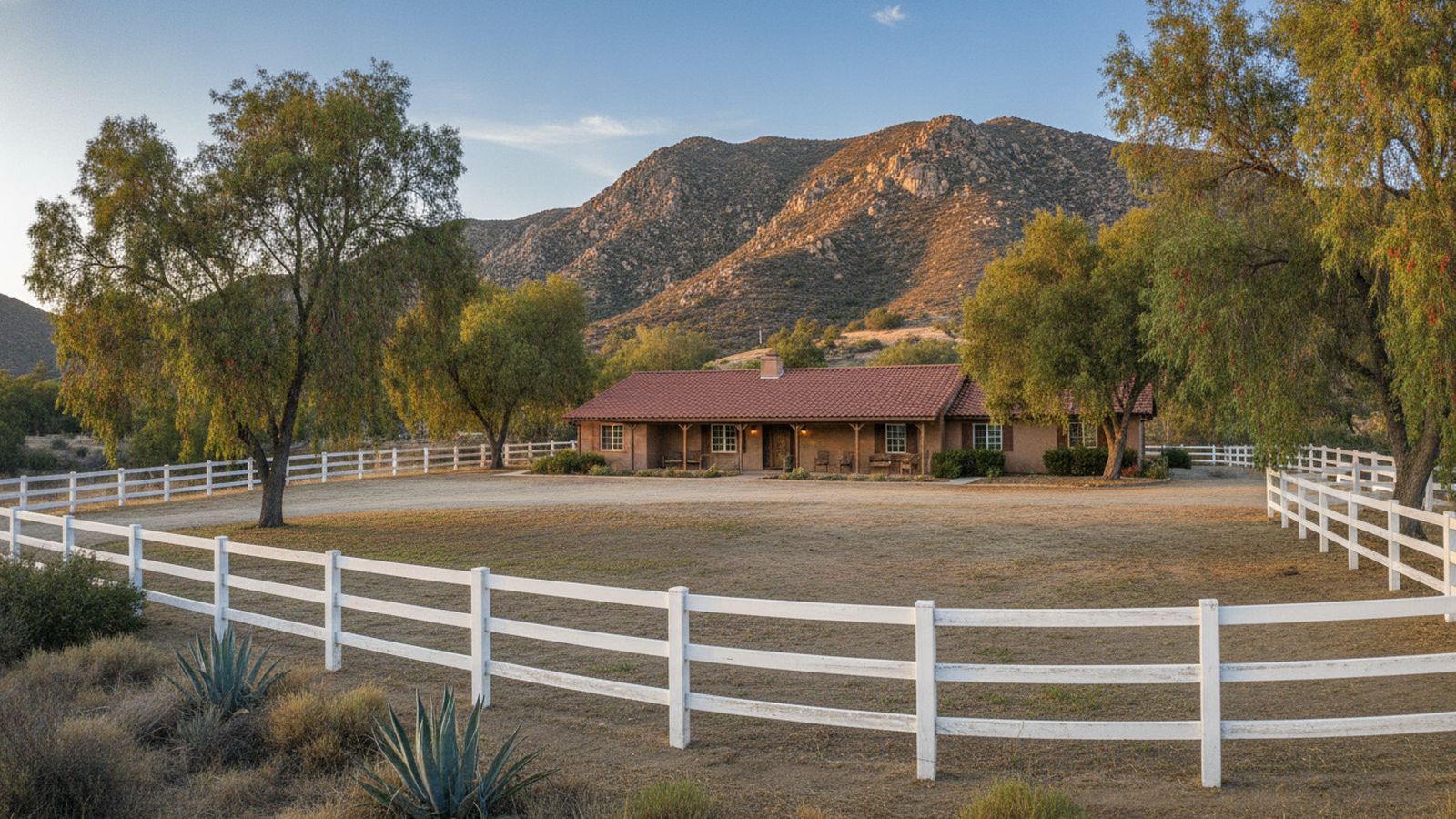
Located in the Sweetwater River valley, the unincorporated community of Bonita is ringed by National City and Chula Vista, though neither city ever annexed it. Farmers once grew citrus, dairy, and vegetables in the fertile valley, and the Sweetwater Dam, built in the 1880s, supplied irrigation water. After World War II, large rural lots were gradually subdivided into ranch-style homes, many retaining room for horses. Bonita's semi-rural character, equestrian trails, and county zoning distinguish it from the dense suburbs around it.
Housing in Bonita
Bonita's housing is mainly detached homes built between the 1950s and the 1980s, frequently sitting on half-acre or larger lots. Ranch homes with stables, corrals, and workshops line the equestrian areas near Sunnyside and the Sweetwater River, while the hills of Bonita Highlands and Bonita Woods add larger custom homes with views. Some newer subdivisions from the 1990s and 2000s sit near the edges of the community. Condos and townhomes are limited, mainly near Bonita Road. Many parcels have room for ADUs or guest quarters, and septic systems remain common on older properties.
What shifts value here
Lot size, usable flat land, and equestrian improvements drive value, along with views of the valley or San Miguel Mountain. Bonita's unincorporated status means county rules apply for building and permits, and buyers often value the absence of HOAs and Mello-Roos taxes. Homes near the Sweetwater River face flood considerations, while hillside lots carry wildfire risk. Traffic along Bonita Road and State Route 54 can affect nearby homes. Older homes in original condition often compete with renovated ones, and septic systems need inspection and documentation when properties change hands.
Neighborhoods
- Sunnyside
- Bonita Highlands
- Bonita Woods
- Central Bonita
- Sweetwater Valley
Landmarks
- Sweetwater Regional Park
- Chula Vista Golf Course
- Bonita Museum and Cultural Center
- Sweetwater Reservoir
- Bonita Road
Valuation approach
Comparable sales in Bonita are usually drawn from within the community, with adjustments for lot size, usable land, equestrian features, and views. When sales are limited, an appraiser may look to rural pockets of Chula Vista or Spring Valley for similar acreage, carefully adjusting for location. Barns, arenas, and guest houses need separate review, including whether county permits exist for each structure. Proximity to riding trails and the regional park can also influence buyer interest. Owners should provide surveys, county permits for outbuildings or additions, septic records, and flood zone information.
Local question
How does a horse property in Bonita compare with a standard lot when appraised?
Equestrian properties draw a narrow pool of buyers, so their worth hinges on how much land is usable, how well the corrals and barns are kept, and whether trails are nearby. The appraiser compares with other Bonita equestrian sales where possible and adjusts for differences in facilities and acreage. The report explains how much those improvements contribute, which matters for estate, trust and Prop 19 cases.
ZIP codes: 91902