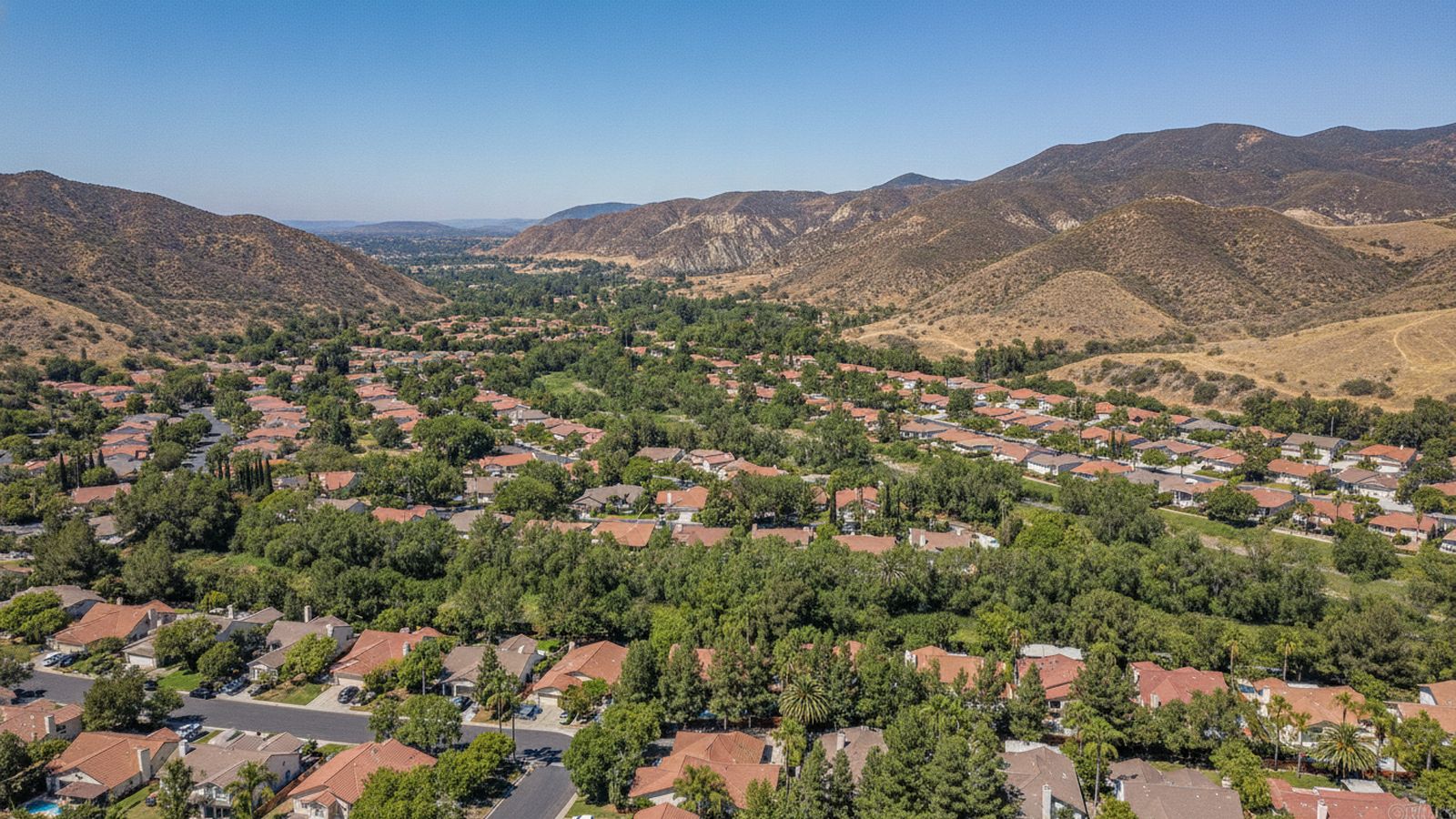
Occupying the valley of the San Diego River northeast of El Cajon, Santee is bounded by rough hills on the north and east and by Mission Trails Regional Park on the west. Ranching and dairy operations dominated the valley for decades before suburban growth arrived in the 1960s and 1970s. The city incorporated in 1980 and has continued to add housing tracts on the surrounding hillsides. The city links to the rest of the county via State Route 67 and State Route 52, and Santee Town Center is the final stop on the Green Line trolley.
Housing in Santee
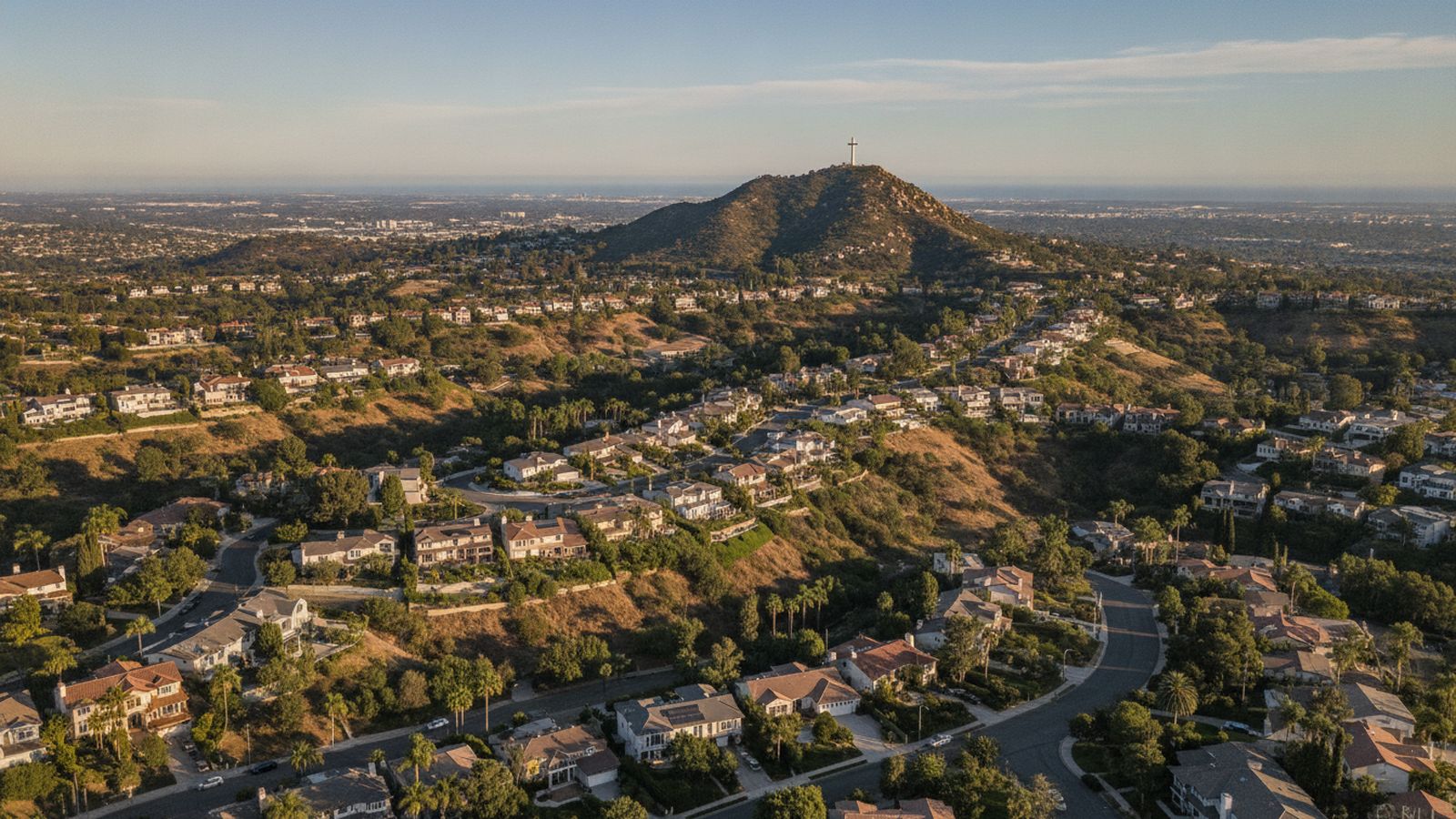
Santee's housing stock is mostly detached single-family homes built from the late 1960s through the 2000s. The original tracts on the valley floor are made up of one-story ranch houses and split-level homes on typical suburban lots. Later development brought two-story production homes on the slopes, including planned communities with HOAs and some newer homes with Mello-Roos assessments. Mobile home parks make up a meaningful share of the housing, and condominiums and townhomes cluster near Mission Gorge Road, Cuyamaca Street and the Town Center area. Sky Ranch and other hillside areas feature bigger houses with views, whereas Carlton Hills and Carlton Oaks combine older ranch houses with more recent infill. ADUs appear on the larger older lots along the valley floor.
What shifts value here
Values in Santee respond to position within the valley. Homes on the hills with views over the San Diego River or toward Mission Trails generally sell above those on the valley floor. Proximity to Gillespie Field brings aircraft noise to parts of the southern and western city, which can affect buyer interest. Newer tracts may carry Mello-Roos or HOA costs that buyers weigh against older homes without those charges. Homes near the river or in low areas may fall within flood zones requiring insurance. Wildfire exposure along the northern and eastern edges influences insurance availability and buyer perceptions. Access to the trolley, Santee Lakes and the river trail supports demand in neighborhoods close to those amenities.
Neighborhoods
- Carlton Hills
- Carlton Oaks
- Sky Ranch
- West Hills
- Santee Town Center
- Fanita Ranch
Landmarks
- Santee Lakes Recreation Preserve
- San Diego River Trail
- Mast Park
- Mission Trails Regional Park
- State Route 52
Valuation approach
Santee comparables should match the age and development pattern of the subject: an older valley ranch house compares best with other homes of that era, while a newer hillside tract home needs sales from similar planned neighborhoods. Adjustments often cover view, lot size, HOA and assessment differences, condition and solar ownership. Owners should gather HOA documents, Mello-Roos tax bills, solar lease or purchase paperwork, and records of permitted additions. For homes near Gillespie Field or the river, noting flight path exposure or flood zone status helps the appraiser select comparables with similar influences.
Local question
Does a Mello-Roos assessment on a newer Santee home lower its appraised value?
It can, depending on how buyers in that neighborhood respond. In Santee, a newer tract home with an ongoing Mello-Roos assessment may sell for less than a comparable home without one, because buyers factor the annual cost into what they will pay. The appraiser compares sales within the same assessment district and against older homes nearby. Providing the current tax bill and remaining assessment term helps quantify the effect.
ZIP codes: 92071