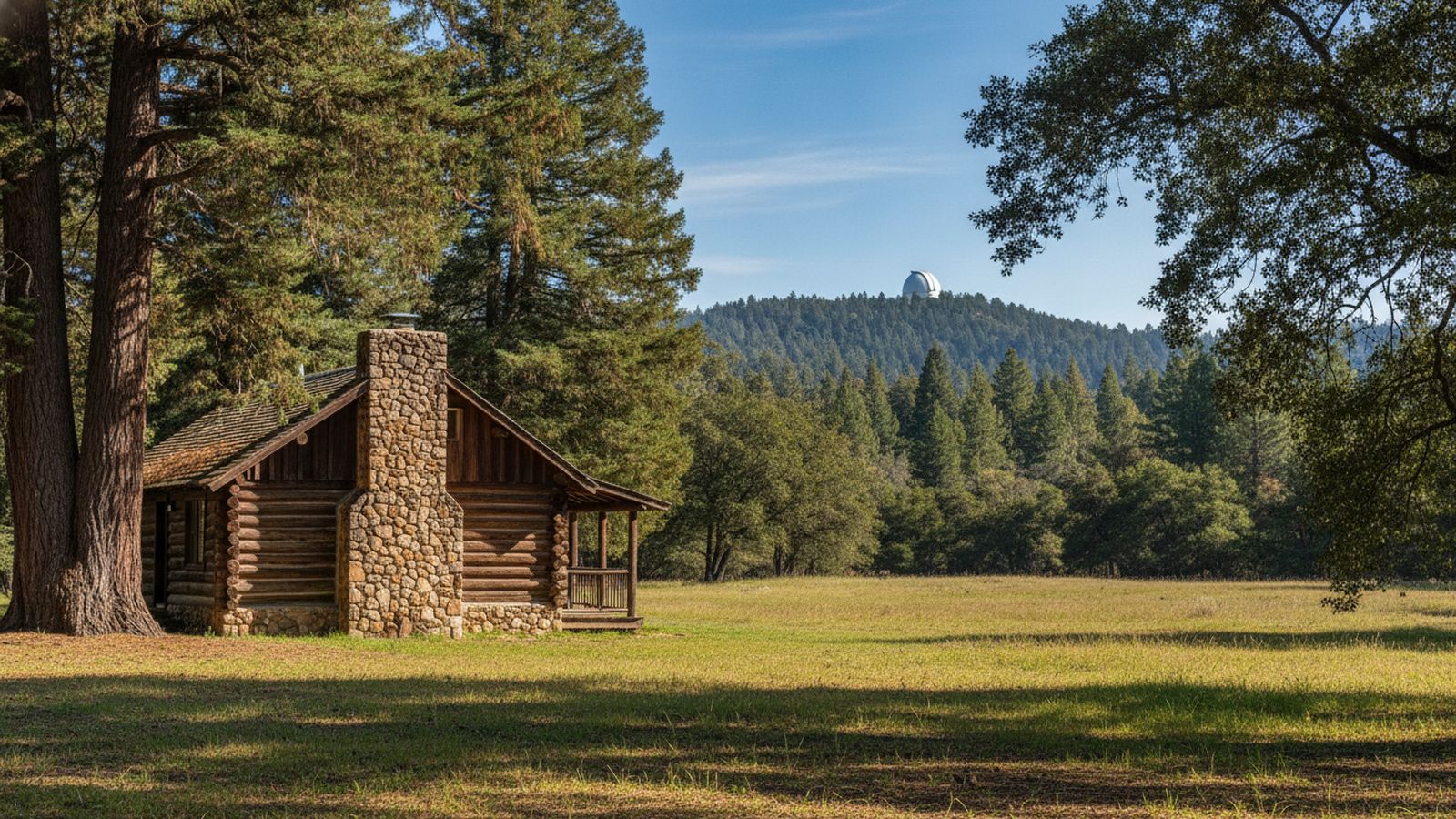
Palomar Mountain rises above the Pauma and San Luis Rey valleys in northern San Diego County, with its small residential community spread across forested slopes between roughly 4,500 and 5,500 feet. Cattle ranchers and homesteaders arrived in the late nineteenth century, and early resorts drew visitors seeking cool summers. The mountain gained worldwide recognition when the Palomar Observatory and its 200-inch Hale Telescope were completed in 1948. Cabins and homes followed along roads such as South Grade and East Grade, and Palomar Mountain State Park preserves much of the surrounding forest and meadow land.
Housing in Palomar Mountain
Homes on Palomar Mountain are mostly detached cabins and houses built from the 1920s through the 1980s, with some newer custom construction. Many began as summer retreats and were later converted to year-round homes. Lots range from small sloped parcels in the Crestline area to multi-acre properties with meadows and forest. Wood siding, steep roofs, decks and wood or propane heat are typical. Some properties include guest cabins or workshops. There are no condominiums or tract developments. Some homes were rebuilt or updated after wildfires, so construction age and standards vary considerably from one property to the next.
What shifts value here
Palomar Mountain values balance natural beauty and seclusion against access challenges. South Grade and East Grade roads are steep and winding, winter snow can close them, and the trip to services in Valley Center or Escondido is long. Buyers seek forest settings, cooler summers and dark skies. Water comes from wells, springs or small shared systems, and supply can be a concern. Septic systems serve all homes. Wildfire risk is high, and insurance availability is a growing concern. Views across the valleys toward the coast or desert add value. Cabins needing major updates, homes on steep or shaded lots and those with limited water often sell at lower prices.
Neighborhoods
- Crestline
- Birch Hill
- South Grade Road area
- East Grade Road area
- Upper Palomar village
Landmarks
- Palomar Observatory
- Palomar Mountain State Park
- Doane Pond
- Boucher Hill
- South Grade Road (S6)
Valuation approach
Comparable sales for Palomar Mountain are limited, so an appraiser may extend the time frame and also review sales from Julian and other mountain communities with similar settings. Adjustments typically address water source, winterization, lot slope, view, road access and cabin condition. Owners should collect water system documents, septic records, permits for additions and rebuilds, heating system details, roof and deck repair records and any agreements with neighbors regarding shared roads or water. Photographs of interior updates and outdoor features help document the property.
Local question
Why might Julian sales be used to appraise a home on Palomar Mountain?
Palomar Mountain has few sales each year, and Julian is the closest community with a comparable mountain setting, elevation and buyer pool. The appraiser adjusts for differences such as distance to services, water supply, snow exposure and community amenities. Local Palomar sales receive the most weight when available, while Julian sales help support the conclusion and provide market context when local data is thin.
ZIP codes: 92060