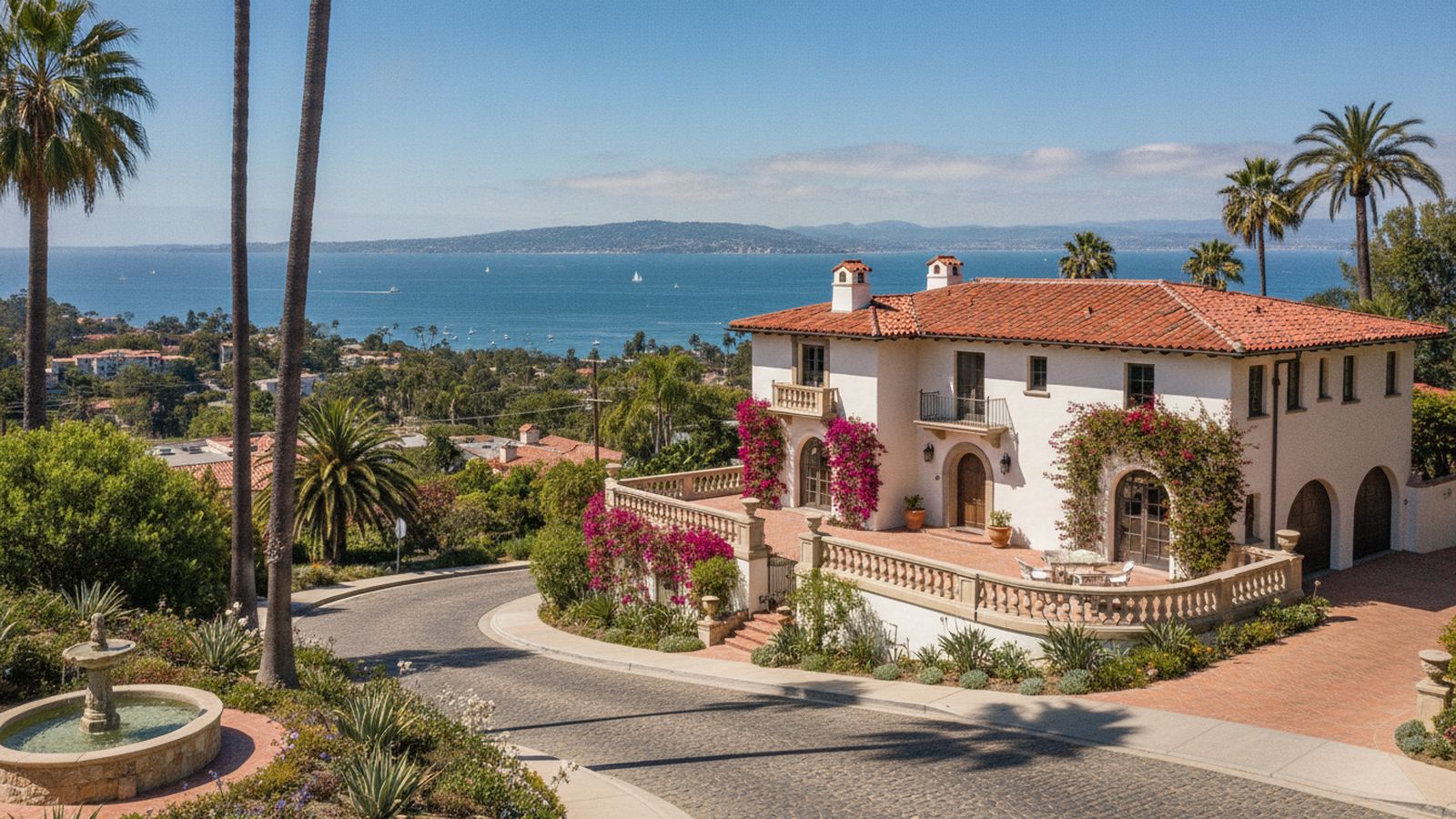
Mission Hills holds the high ground between Old Town and Hillcrest, with Presidio Park and the bluffs over Mission Valley on its north side. Kate Sessions, the horticulturist associated with Balboa Park, ran a nursery here and helped promote the area's early development. Streetcar service along Washington Street brought buyers, and from the 1910s through the 1930s builders filled the curving streets with Craftsman, Mission Revival and Spanish Colonial Revival houses. Several parts of the neighborhood are now designated historic districts, and the area retains much of its early twentieth century character and mature landscaping.
Housing in Mission Hills
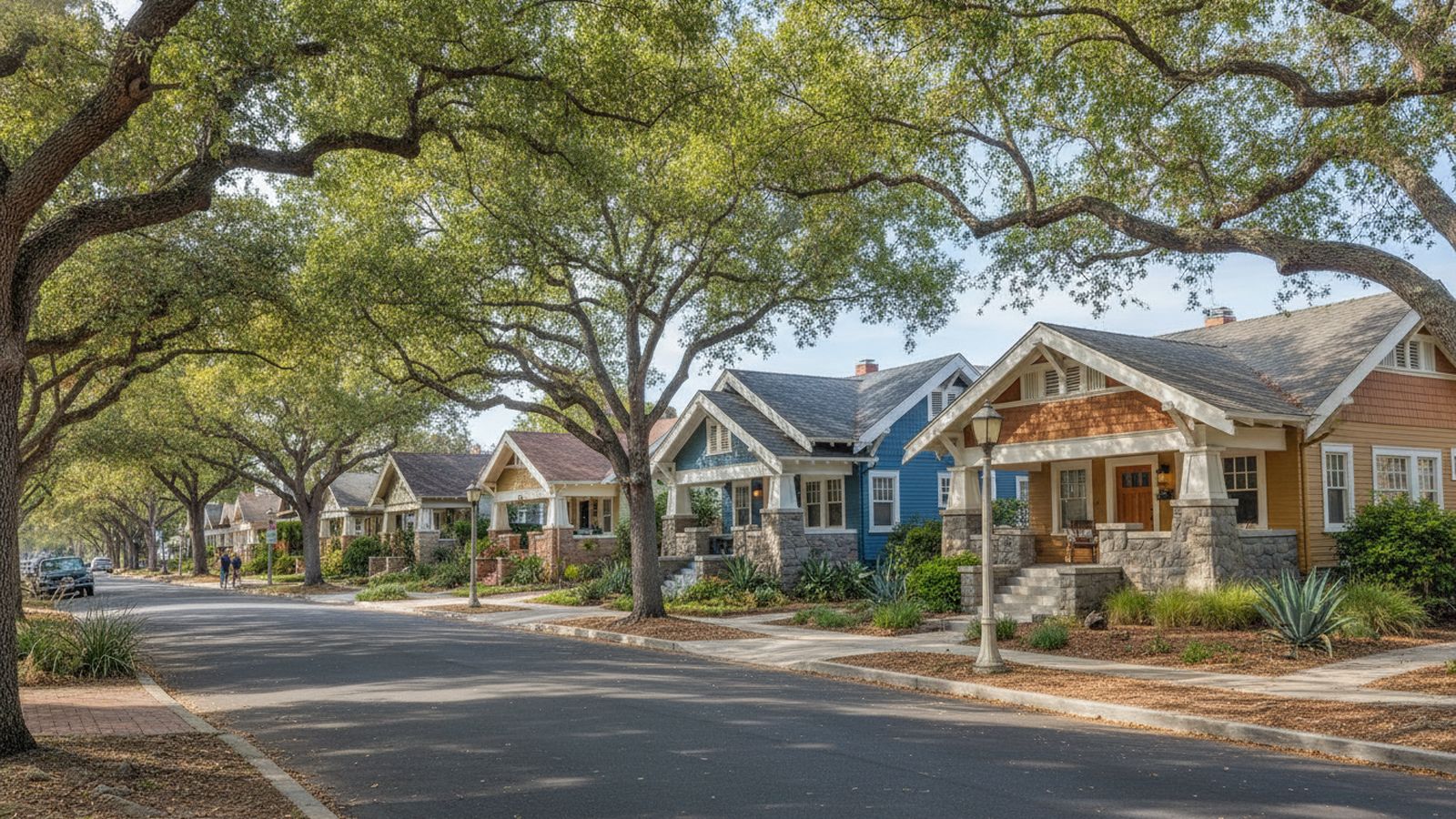
The usual home is a detached single-family house on a lot of about 5,000 to 10,000 square feet, with bigger parcels on the bay-facing slopes and along canyon edges. Architectural styles include Craftsman bungalows, Prairie-influenced homes, Spanish Colonial Revival and Mission Revival houses from the 1910s to 1930s, and scattered mid-century modern homes built on steeper lots. Original details such as tile roofs, leaded glass and built-in cabinetry carry weight with buyers. Small condominium buildings and older apartments line Washington Street and the blocks near the Hillcrest border. Garages are frequently detached and narrow, many driveways are steep, and numerous lots slope sharply toward the canyons, which limits usable yard area on some parcels.
What shifts value here
Views are the dominant value factor: homes with clear sightlines to San Diego Bay, Point Loma or Mission Valley command large premiums over similar houses without them. Historic district designation limits exterior alterations but also qualifies many homes for Mills Act contracts that reduce property taxes, an advantage that passes to buyers. Aircraft noise from San Diego International Airport affects the southern slopes nearest Lindbergh Field. Canyon lots raise slope stability questions and brush clearance rules, while street parking, steep driveways and garage size influence everyday usability. The degree of original architectural integrity, compared with unsympathetic remodeling, can account for a meaningful part of a sale price.
Neighborhoods
- Inspiration Heights
- Fort Stockton Line Historic District
- Mission Hills Historic District
- Middletown
- West Mission Hills
- Sunset Boulevard area
Landmarks
- Presidio Park
- Pioneer Park
- Junipero Serra Museum
- Washington Street
- Mission Hills Nursery
Valuation approach
Comparable sales are matched closely by view quality, architectural era and lot topography, which means the best comparables may be several blocks apart rather than next door. Sales in Mission Hills itself are preferred, with Hillcrest, Bankers Hill or Point Loma used as secondary sources when they share similar view and age characteristics. Adjustments often address view, historic integrity, garage and parking, lot usability and updating. Owners should gather any Mills Act contract and recent tax bills, historic designation documents, permits for remodels and foundation work, and geotechnical reports for canyon-edge lots.
Local question
Does a Mills Act contract on a Mission Hills home change its appraised market value?
It can. Because the contract stays with the property and lowers annual property taxes, buyers may pay somewhat more for a home that carries one, though the contract also requires preservation work and limits alterations. An appraiser looks for sales of designated homes with active contracts and compares them with non-contract sales of similar age and view. The recorded contract, recent tax bills and the required maintenance plan support that analysis.
ZIP codes: 92103