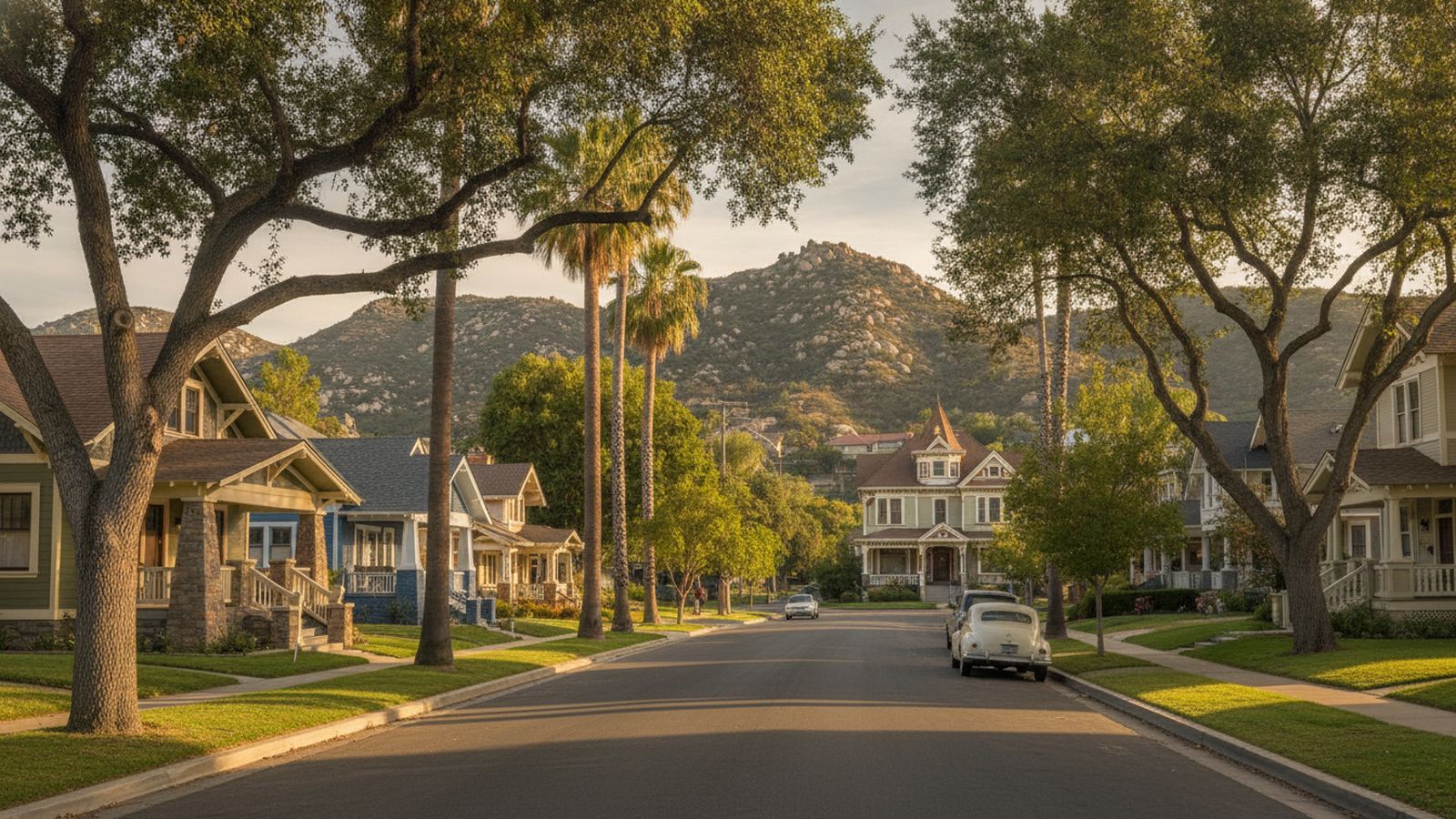
Escondido fills a bowl-shaped valley in inland North County, surrounded by granite hills and connected to San Diego by Interstate 15 and to the coast by State Route 78. Incorporated in 1888, it began as a farming town known for grapes and citrus, and its Victorian and Craftsman core around Grand Avenue still reflects that era. Postwar growth spread tract housing across the valley floor, while later decades brought larger homes into the foothills to the east and south. Today Escondido is one of the largest cities in the county, with housing that spans more than a century.
Housing in Escondido
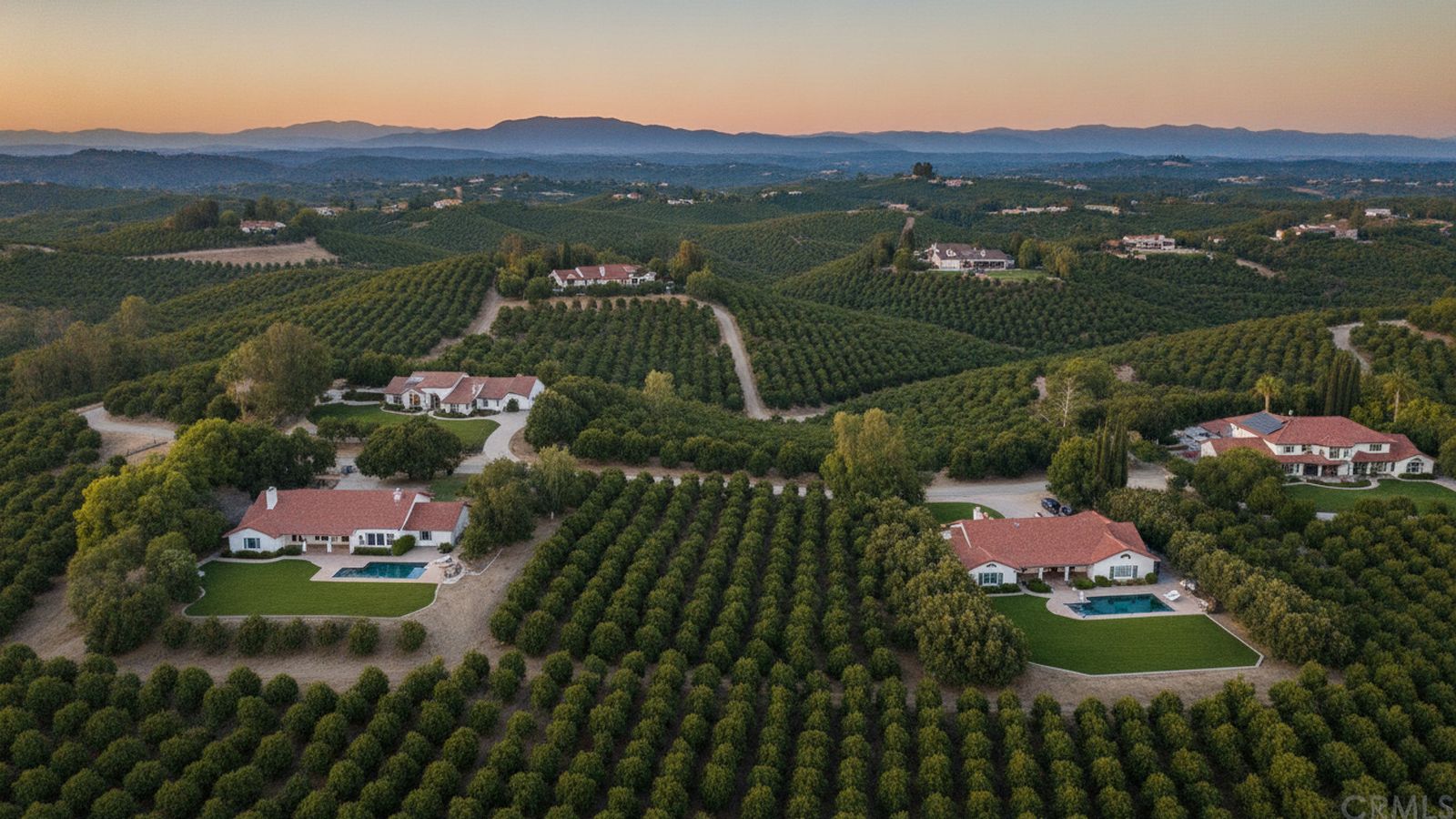
Craftsman, Spanish Revival and Victorian houses dating from the late 1800s to the 1930s fill the Old Escondido Historic District, often on roomy city lots with separate garages. Surrounding them, single-story ranch homes from the 1950s through the 1970s cover much of the central valley. Planned subdivisions of two-story stucco houses, mainly built since the 1980s, are found in the city's eastern and southern sections. The outer foothills, including areas around Lake Dixon and Felicita, contain large-lot homes and semi-rural parcels with groves or horse facilities. Condominiums, apartments and mobile home parks are concentrated near Escondido Boulevard and East Valley Parkway, and ADU construction on older lots has accelerated.
What shifts value here
Values in Escondido shift sharply by location and age of construction. Historic homes in Old Escondido sell on character and restoration quality, with Mills Act contracts reducing property taxes on some designated houses. Foothill properties with views and privacy command premiums, while homes near busy commercial corridors or Interstate 15 trade lower. Large rural parcels on the eastern and northern edges face wildfire exposure and rising insurance costs, and some rely on septic systems. Condition varies widely in the older ranch neighborhoods. Proximity to downtown amenities and the Sprinter transit center increasingly appeals to buyers priced out of coastal markets.
Neighborhoods
- Old Escondido Historic District
- Felicita
- Kit Carson
- North Broadway
- Lake Dixon area
- East Valley Parkway corridor
Landmarks
- Grand Avenue
- California Center for the Arts
- Kit Carson Park
- Dixon Lake
- Daley Ranch
Valuation approach
Escondido demands careful neighborhood matching because a restored 1910 Craftsman, a 1965 ranch and a foothill estate draw from entirely different buyer pools. The appraiser looks closely at historic designation, condition, view, lot usability and utilities on rural parcels. For older homes, documenting foundation work, electrical upgrades and sewer lateral replacement matters. Owners should supply permits for additions and ADUs, Mills Act agreements if any, and photos of renovated areas. For estate or date-of-death assignments, describing the home's condition at the effective date prevents later disputes over updates made after the owner's passing.
Local question
Does a Mills Act contract on an Old Escondido home change its appraised market value?
Under a Mills Act contract, the owner pays lower property taxes in exchange for maintaining the historic house, and buyers frequently view the savings as a benefit. The contract transfers with the property, so its effect can show up in sale prices when comparable historic homes with and without contracts are available. The appraiser will ask for a copy of the contract and any preservation duties imposed by the city, because those obligations can also affect what a buyer will pay.
ZIP codes: 92025, 92026, 92027, 92029