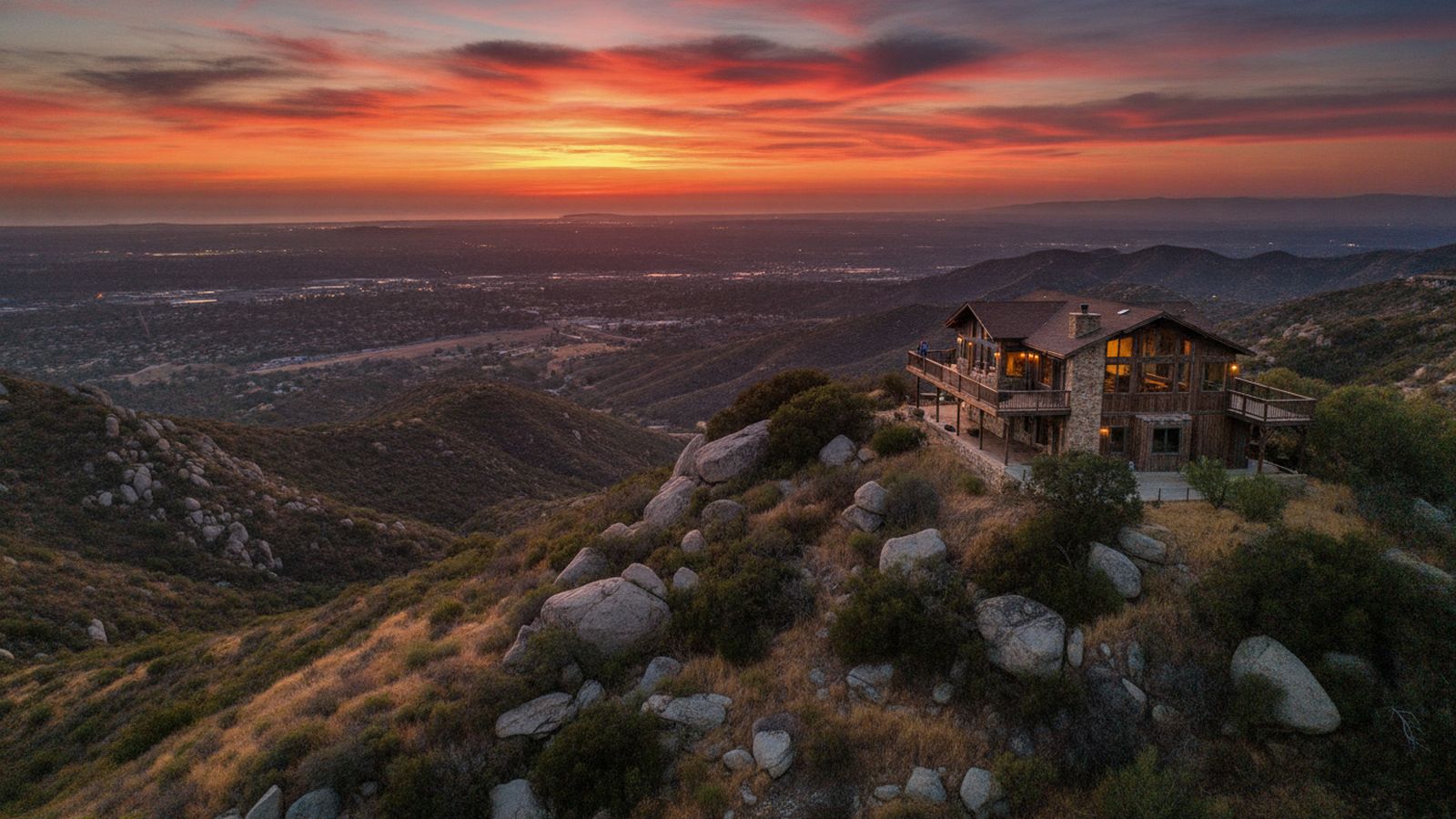
East of El Cajon, the unincorporated community of Crest sits atop a ridge, accessed via La Cresta Road as it rises from the valley below. Homes here sit high above the surrounding canyons, with views west across the El Cajon valley and east toward the inland mountains. The area developed slowly through the twentieth century as a rural retreat, with homes built individually on large lots. Much of Crest burned in the 2003 Cedar Fire, and numerous houses were reconstructed later, so sections of the community have newer homes.
Housing in Crest
Crest's housing is mainly custom single-family homes on large lots, often an acre or more. Styles vary widely, from older cabins and ranch homes to newer homes rebuilt after the 2003 fire to more current building codes. Many properties have horse facilities, outbuildings, workshops and guest houses. Lots can be steep and irregular, with long private driveways. Most homes rely on septic systems, and some use private wells, though water service is available in parts of the area. There are no tract subdivisions or condominiums. ADUs and guest quarters are common on larger parcels.
What shifts value here
Views, acreage and privacy drive values in Crest. Homes with sweeping valley or mountain views on usable land often sell at premium levels. Wildfire risk is a defining factor, affecting insurance availability, costs and buyer perceptions. Homes rebuilt after 2003 to newer codes may be viewed more favorably. Access along winding roads can deter some buyers. Septic systems and wells require inspection and influence value. Usable flat land for horses or outbuildings adds value compared to steep, unusable parcels. Limited comparable sales make each property's characteristics especially important. Parcels with public water service often draw broader buyer interest than those depending solely on a well.
Neighborhoods
- La Cresta Road area
- Mountain View Road area
- Suncrest Boulevard area
- Old Highway 80 corridor
Landmarks
- La Cresta Road
- Interstate 8
- Flinn Springs County Park
- Harbison Canyon
Valuation approach
Crest appraisals often require a wider search for comparables, including sales in Harbison Canyon, Dehesa, Alpine or Lakeside's rural areas. Adjustments address acreage, usable land, view, outbuildings, water source, septic and age or rebuild status. Sales separated by a ridge or canyon can differ in fire exposure and access, so the appraiser weighs location within the community as well. Owners should gather septic and well records, permits for rebuilds, additions and outbuildings, brush clearance records and insurance information. A site map or list of outbuildings with dimensions helps the appraiser assess the property's improvements.
Local question
How does fire risk affect the appraised value of a Crest home?
Fire risk affects value mainly through buyer perceptions and insurance availability and cost. In Crest, the appraiser depends on recent nearby sales, which already capture how buyers value these factors. Homes rebuilt to newer fire-resistant codes or with strong defensible space may compare favorably. Documentation of brush clearance, fire-resistant construction and current insurance helps support the analysis.
ZIP codes: 92021