Key points
- Bluff-top value combines the view, a parcel with a retreating edge, and its permit history.
- Local Coastal Program setbacks can shrink the buildable area well below the lot size.
- Seawall permit status, ownership, term and maintenance duties all affect what buyers pay.
- Bluff comparables often come from a longer time span and a wider stretch of coast.
- View and beach-access premiums are measured from paired sales, not applied as a rule of thumb.
Why the bluff edge changes the valuation problem
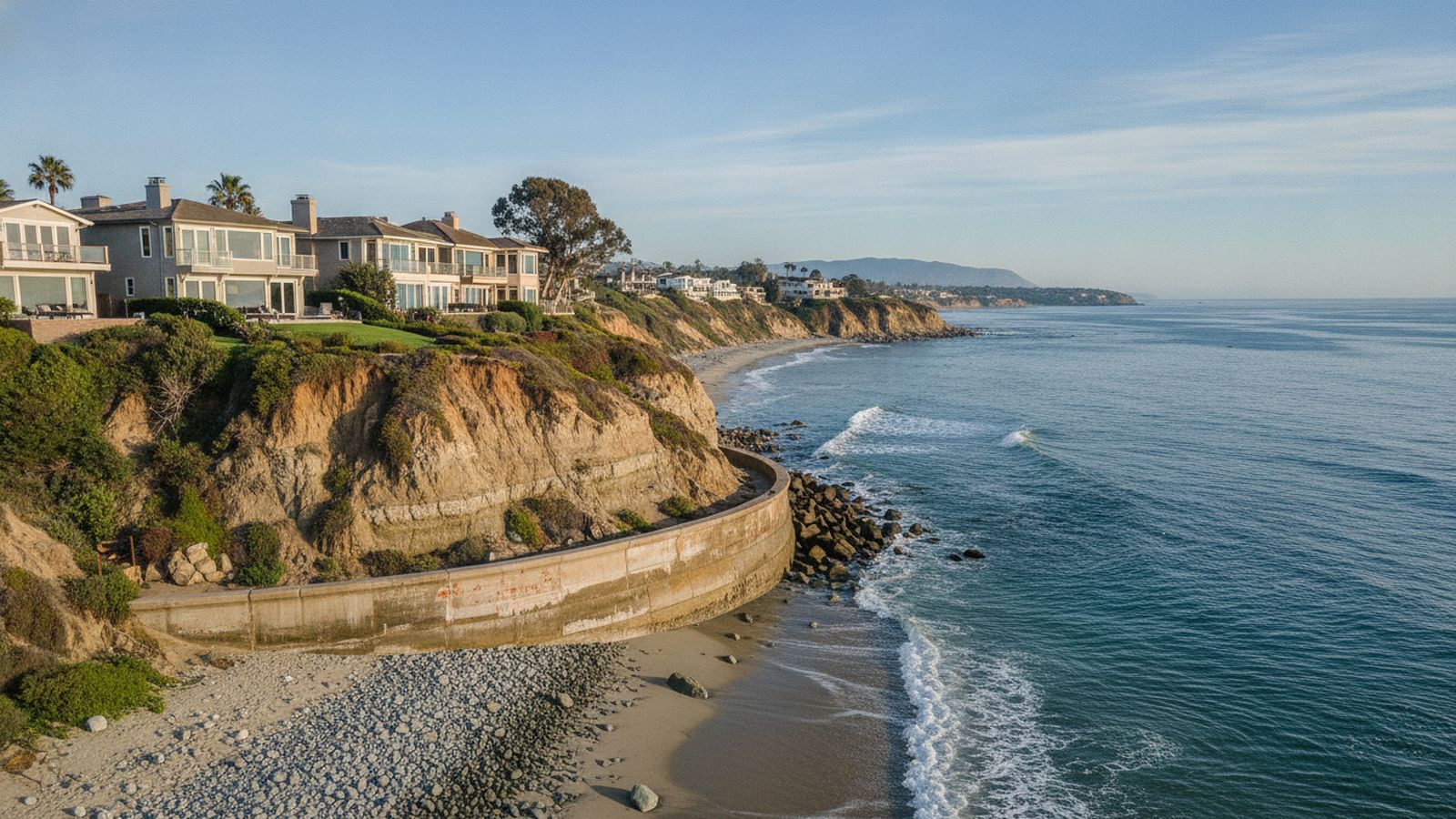
A house on the sandstone bluffs above Beacon's, Grandview or Fletcher Cove is not simply a larger version of the house across the street. Buyers on the bluff are purchasing a view corridor, private or near-private beach access in some cases, and a set of regulatory and physical risks that inland buyers never face. The usable life of the improvements may depend on how fast the bluff retreats and whether shoreline protection exists or can be permitted. Rebuilding or expanding can require a coastal development permit with conditions that limit size and placement. An appraiser working on these homes therefore studies the parcel as a combination of view amenity, land with a moving edge, and permit history. Ignoring any one of those three tends to push the opinion of value too high or too low, and the gap can be large on parcels this expensive.
Setbacks, the Local Coastal Program and the Coastal Commission
Encinitas and Solana Beach each regulate coastal development through a Local Coastal Program certified by the California Coastal Commission, and the Commission keeps appeal jurisdiction over many bluff-top projects. These programs set bluff-edge setbacks based on geotechnical findings, so the buildable envelope on a bluff lot can be much smaller than the lot size suggests. New construction and major remodels are typically sited so they will not need a seawall over their expected life. For valuation, this means two lots of identical size can carry very different development potential. An appraiser reviews the recorded permits, any geotechnical reports the owner has, and the conditions attached to past approvals. A home built decades ago that now sits closer to the edge than current rules allow may be legal nonconforming, and the limits on rebuilding it after a major loss deserve careful attention in the report.
Seawalls, erosion and permit conditions
Many bluff homes in Leucadia and Solana Beach sit above lower seawalls, notched-bluff infills or upper-bluff retaining structures. Under the California Coastal Act, shoreline protection is generally allowed when needed to protect existing structures in danger from erosion, and the Commission has attached conditions such as mitigation fees, monitoring and limited permit terms. Whether a wall is permitted, who owns it, how long its approval runs and what maintenance obligations follow the property all matter to a buyer. Shared walls built by several neighbors raise questions about cost-sharing agreements. The fatal 2019 bluff collapse at Grandview Beach made erosion risk concrete for the local market, and buyers now ask harder questions about geology. An appraisal does not replace a geotechnical engineer, but it should state what protection exists, what documentation was reviewed and how those facts were weighed.
Finding comparable bluff sales
Ocean-bluff sales are few in any given year, so the comparable search usually extends further back in time and along more of the coastline than a typical inland assignment. A Neptune Avenue sale may be compared with bluff sales in Solana Beach, Del Mar or Carlsbad when Encinitas data is thin, with adjustments for differences in setback, protection and beach access. Time adjustments have to be supported by market evidence rather than applied as a flat rate. The appraiser also separates true bluff-front sales from homes on the inland side of the same street, which share the address but not the exposure or the risk. Sales of bluff lots that were bought for teardown can reveal land value and buyer attitudes toward rebuild limits. Each comparable needs its permit and seawall status confirmed as closely as public records and listing data allow.
Measuring the view and access premium
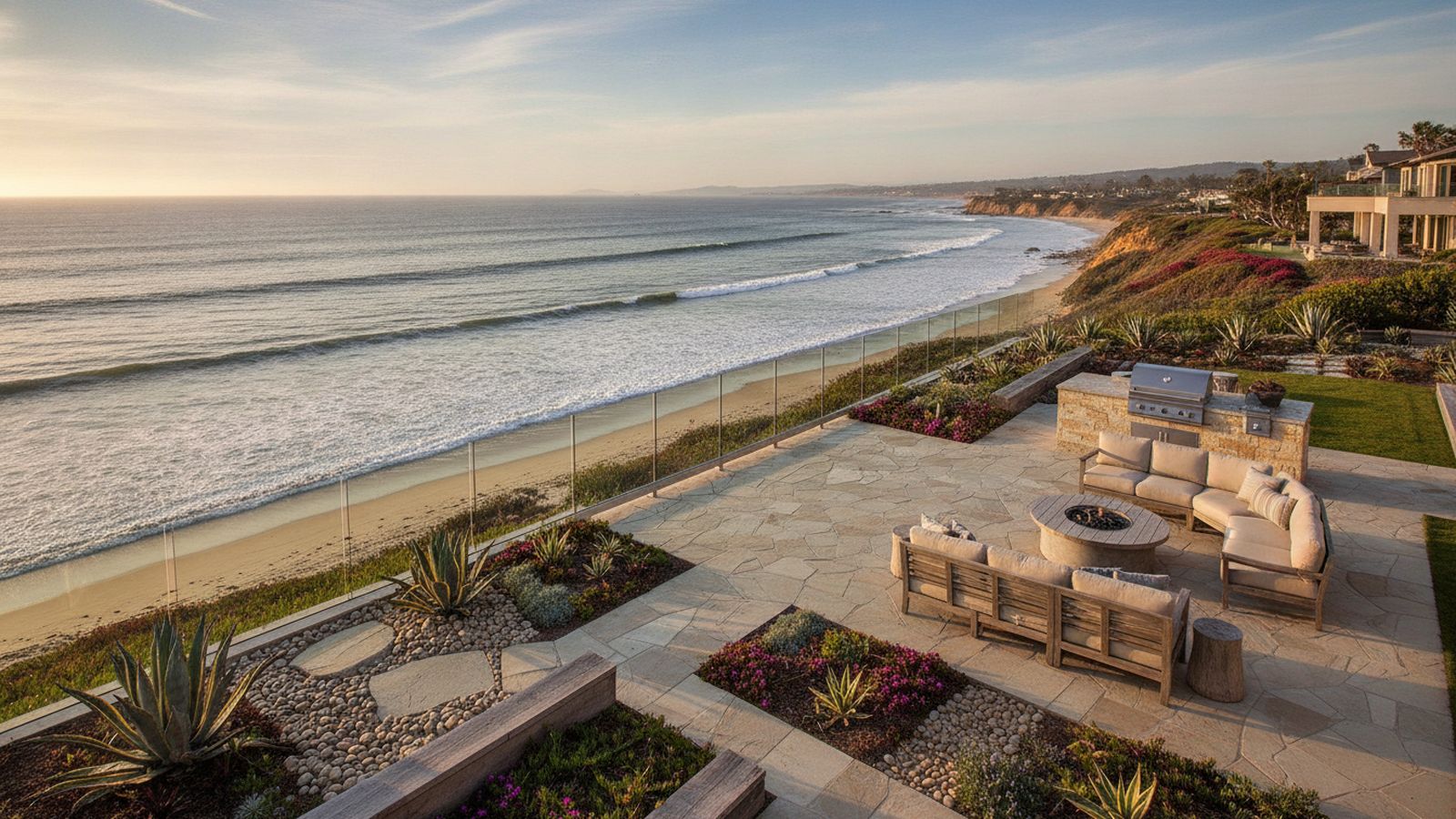
The premium for a white-water ocean view is real, but it is not uniform. A full panoramic view from the main living level is valued differently from a peek view out of an upper bedroom, and a direct bluff-front view differs from a view across a coastal street or over a neighbor's roof. Stair access to the sand, whether private, shared or public nearby, adds a separate layer. In Encinitas and Solana Beach, an appraiser often isolates these premiums by comparing paired sales on the same block or the same tract where only the view or position differs. Where pairs are not available, the analysis relies on a wider set of coastal sales and the reasoning is stated plainly. The goal is an adjustment that a reviewer, an attorney or an assessor can follow from the evidence to the conclusion without guessing.
Questions
Does a seawall always add value to a bluff home?
Not automatically. A permitted wall with a long approval term and clear maintenance arrangements usually supports value because it extends the expected life of the house. An unpermitted wall, a structure nearing the end of its permit term, or a shared wall with no written cost agreement can create uncertainty that buyers discount. The appraisal should describe the wall, the documents reviewed and how comparable sales with and without protection were treated.
What documents help with a bluff-top appraisal?
Copies of coastal development permits, building permits, any seawall approvals and their conditions, recent geotechnical or bluff-retreat reports, surveys showing the bluff edge, and agreements with neighbors over shared protection are all useful. Insurance correspondence and records of past bluff failures on or near the parcel also help. When records are missing, the report states that limitation so readers understand what the value conclusion rests on.
General information, not legal or tax advice.